



Eyelid surgery
Double eyelid surgery: how do you choose between non-incisional and incisional methods?
Before choosing a surgical method, explore the features of your eyelids that need to be assessed.
The choice between non-incisional and incisional methods considers eyelid skin and tissue, your desired crease, and previous surgery. The method's name alone cannot determine what suits you.
When you first explore surgery, recovery and scarring may be your main concerns. Alongside those concerns, consider what you want to change about your own eyes. Separating how a crease is created from whether skin needs to be adjusted can help you prepare more specific questions for your consultation.
Key points
Three things to know before choosing
- Assess your eyelids and the changes you want together.
Photos or outward appearance alone cannot establish how much tissue adjustment is needed.
- Non-incisional, incisional, and partial-incision methods differ in access and fixation.
Specific techniques can vary even within the same named method.
- A method's name alone cannot predict scarring or recovery, or guarantee crease retention.
Discuss both the changes you expect and the limits of what is possible.

How do non-incisional and incisional methods differ?
Non-incisional double eyelid surgery includes methods that connect tissue with sutures through small access points to create a crease. If you hear terms such as buried-suture or natural-adhesion techniques, ask which areas are accessed and how the crease is secured. A medical review of non-incisional double eyelid surgery also emphasizes selecting a method with the patient's eyelid condition in mind.
An incisional approach follows the planned crease, allowing tissue to be assessed and skin or tissue to be adjusted where needed as the crease is formed. Whether excess skin or tissue adjustment needs to be addressed is one reason to consider this approach. General principles and assessment points are also described in the American Academy of Ophthalmology's EyeWiki article on double eyelid surgery.
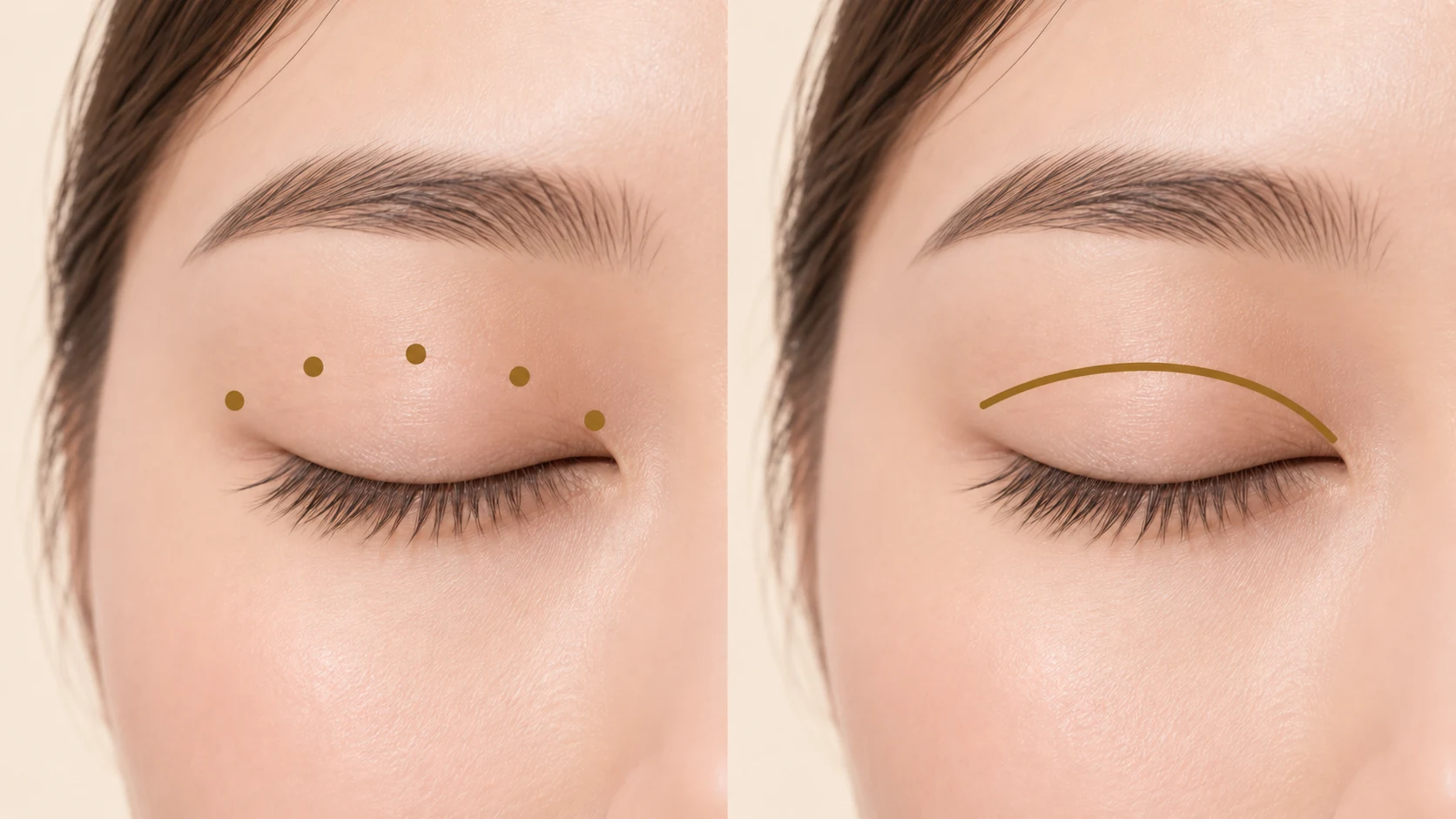
What features of your eyelids are assessed at a consultation?
An impression that your eyelids look thick does not determine the surgical method. Skin and tissue, your existing crease, and eyelid-opening function need to be assessed together. If you bring a photo of a crease you like, explain which features appeal to you.
- Excess skin and drooping: Assess whether skin needs to be adjusted separately from creating a crease.
- Tissue thickness and distribution: Distinguish visible thickness from the tissue that may actually need adjustment.
- Desired crease and existing eye shape: Consider crease height and shape in relation to your current anatomy.
- Eyelid-opening function and previous surgery: Assess whether there are issues beyond crease formation and how past surgery affects the plan.
These points are not a checklist for diagnosing yourself or choosing your own operation. They help you ask, 'Which features of my eyelids are the reasons for considering this method?' at your consultation.
Is partial-incision surgery halfway between the other methods?
Partial-incision methods combine fixation with some tissue adjustment through a limited area of access. The name does not describe a single standardized technique. A systematic review of small-incisional double eyelid surgery found that the number, length, and position of incisions, tissue adjustment, and fixation differed across studies.
Rather than assuming a smaller incision suits everyone, ask whether the adjustments you need can be performed within that area. The table below summarizes general differences; it does not describe an individual surgical plan or outcome at JAYJUN.
| Method | General approach | Questions for your consultation |
|---|---|---|
| Non-incisional | Crease fixation using sutures and small access points | Whether skin or tissue adjustment is needed; the specific fixation method |
| Incisional | Access along the crease, with tissue adjustment and fixation where needed | Extent of skin adjustment, crease design, scarring, and recovery planning |
| Partial-incision | Fixation and some tissue adjustment through limited access | Incision position and extent, possible adjustments, and limits |
How should you think about scarring and recovery?
If scarring concerns you, ask about the access sites and the marks that may remain after healing. The term 'non-incisional' does not mean there can be no marks or complications. Incision extent alone cannot establish a recovery date or final appearance.
Eyelid surgery carries risks including swelling, bruising, bleeding, infection, scarring, dry eyes, and difficulty closing the eyes. The American Society of Plastic Surgeons' safety guidance recommends discussing these possibilities before surgery. This is general eyelid-surgery risk information; it does not mean everyone faces the same degree of risk.
If you have work or photography commitments, explain the dates and actual activities at your consultation. Alongside 'How many days will I need?', ask 'What should be assessed before I return to those activities?' to help prepare your schedule.
What should you prepare before a consultation?
Bring photos of creases you like and briefly note your current concerns. Explain which features you want and which changes you wish to avoid. The American Society of Plastic Surgeons' consultation guidance lists surgical goals, eye-related issues, medications, and previous surgery among the topics to discuss.

- Write down desired changes, such as crease height and shape, and your main concerns.
- Summarize previous eye surgery or treatment and symptoms such as dry eyes.
- Prepare information about medications, supplements, allergies, and medical conditions.
- Mention commitments such as work, exercise, or photography that are difficult to reschedule.
- Ask why a method is recommended, what alternatives exist, and what changes and risks to expect.
Frequently asked questions
Does non-incisional surgery leave no scars at all?
It is not possible to guarantee that there will be no access marks or complications. These depend on the technique and individual healing, so discuss access sites and possible marks at your consultation.
Does incisional surgery guarantee that the crease will never loosen?
The name of a method cannot guarantee crease retention. Ask about the specific fixation technique, your tissue condition, possible changes, and the risk of further surgery.
If my eyelids look thick, do I always need an incisional method?
Outward appearance alone cannot establish this. Skin laxity, actual tissue condition, the desired crease, and eyelid-opening function should be assessed together before considering a method.
Can the surgical method be decided from photos alone?
Photos can help communicate the changes you want. The necessary surgical extent and method should be considered alongside findings from an examination and your medical history.
Understand the reasons for choosing a method first
If you are preparing for double eyelid surgery, start by clarifying your desired crease and main concerns. At the consultation, discuss why a method is being considered for your eyes and what extent of change you can expect.
※ Surgical methods, results, and recovery vary between individuals. Complications can include swelling, bruising, bleeding, infection, scarring, dry eyes, and difficulty closing the eyes; serious problems such as changes in vision can occur rarely. Risks relevant to you should be assessed during medical care.