




Eye corner surgery
JAYJUN PLASTIC SURGERY
Reveal a hidden 1 mm for a more open-eyed look
JAYJUN
Medial & upper epicanthoplasty

JAYJUN medial & upper epicanthoplasty
Surgery information
- Operating time
- 30 minutes
- Anesthesia
- Sedation, local anesthesia
- Hospital stay
- Discharge the same day
- Stitch removal
- 7 days
- Recovery period
- Daily activities possible the same day
- Bleeding, bruising and other side effects may occur depending on individual circumstances, and recovery times may vary.
JAYJUN medial & upper epicanthoplasty
Medial vs upper epicanthoplasty
Medial epicanthoplasty
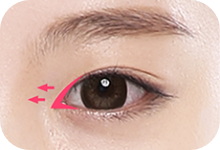
For eyes that are far apart or look less open, surgery releases the epicanthal fold to increase horizontal eye length and adjust eye size
Upper epicanthoplasty
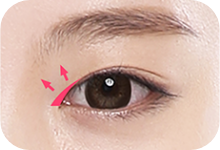
For excess skin covering the inner corners or narrow, sharp-looking eyes, surgery lifts the skin over the inner corners at a 45-degree angle
JAYJUN medial & upper epicanthoplasty
What is an epicanthal fold?
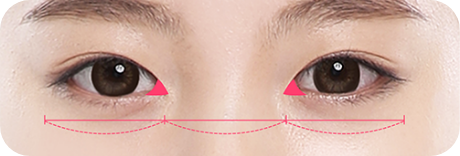
- Epicanthal folds are present in around 70% or more of Koreans
- A fold extending from top to bottom at the inner corner of the eyelid
- Epicanthal folds often make the eyes appear widely spaced
JAYJUN medial & upper epicanthoplasty
Who may benefit?

- A wide distance between the eyes
- An epicanthal fold is present
- Eyes look less open even though they are not far apart
- No effect despite previous medial epicanthoplasty
- The angle of the inner corners makes the eyes look fierce
- Short horizontal eye length
JAYJUN medial & upper epicanthoplasty
Surgical method
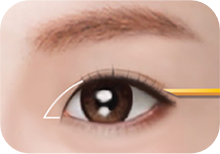
Consider the eye contour and shape in harmony with the face to design a suitable shape
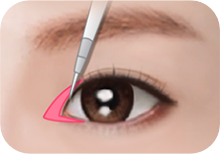
Keep the scar close to the conjunctival margin when incising the conjunctiva inside the inner eye corner
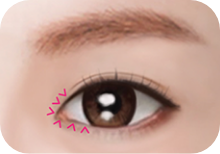
Remove excess skin as needed, then suture as close to the conjunctiva as possible to conceal the scar
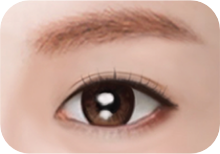
Achieve larger, more open-looking eyes
JAYJUN medial & upper epicanthoplasty
Features
-
Larger, more open-looking eyes
Improves horizontal and vertical eye dimensions together for a larger, more open-eyed appearance
-
Softer-looking eyes
Adjusts the slope of the inner eye corners for a softer appearance
-
Minimized scarring
Incisions close to the conjunctival margin minimize scarring
-
Personalized surgery
Surgery at an ideal angle for each person's eye anatomy and shape

JAYJUN medial & upper epicanthoplasty
Channel JAYJUN
JAYJUN medial & upper epicanthoplasty
FAQ
Answers to frequently asked questions about medial & upper epicanthoplasty.
What are medial and upper epicanthoplasty?
Medial epicanthoplasty addresses the epicanthal fold covering the inner eye corner, giving the eyes a clearer, more open appearance. Upper epicanthoplasty addresses skin covering the upper part of the inner corner, naturally opening the vertical eye dimension and inner-corner contour.
How do medial and upper epicanthoplasty differ?
Medial epicanthoplasty focuses on releasing the epicanthal fold to naturally lengthen the eye horizontally. Upper epicanthoplasty addresses skin covering the upper inner corner to naturally adjust the vertical dimension and inner-corner angle. They can be performed separately or together, depending on the eye shape and epicanthal fold.
What is an epicanthal fold?
An epicanthal fold is a skin fold extending from the inner eyelid toward the inner corner of the eye, and its prominence varies between people. A thick or pronounced fold can make the eyes seem farther apart and the inner corners look less open or sharper.
Who may benefit from medial or upper epicanthoplasty?
These procedures may suit eyes that look widely spaced, inner corners obscured by a pronounced epicanthal fold, short horizontal eye length, sharp or fierce-looking inner corners, or eyes that look small and less open because of excess skin over the upper inner corners. The need for surgery and the method are determined by each person's eye condition.
How long does medial or upper epicanthoplasty take?
The operation takes about 30 minutes, with variations depending on the eye condition and extent of surgery.
What anesthesia is used for medial or upper epicanthoplasty?
The procedures can be performed under sedation or local anesthesia. No overnight stay is required, so you can return home on the day of surgery.
Will medial or upper epicanthoplasty leave prominent scars?
The incision is planned with the conjunctival margin and skin folds at the inner corner in mind, to make scars less noticeable. Red marks or scars may be visible early after surgery, but can gradually fade and look more natural over time.
When are stitches removed after medial or upper epicanthoplasty?
Stitches are usually removed around 7 days after surgery, although the timing may vary with your recovery and the surgical method.
How long is recovery after medial or upper epicanthoplasty?
Most people can resume daily activities after stitch removal. Swelling and bruising may appear early after surgery; their extent varies by individual and they gradually improve with time.
Do the results of medial or upper epicanthoplasty last a long time?
These procedures change the eye shape by addressing skin and folds at the inner corners, so relatively long-lasting results can be expected. However, results and their duration may vary with skin characteristics, healing, and eye anatomy.
What sets JAYJUN eye surgery apart
Your JAYJUN, a standard of beauty

One-to-one, personalized eye surgery
Considering the balance and harmony of your eyes and face, we apply the most suitable surgical method.
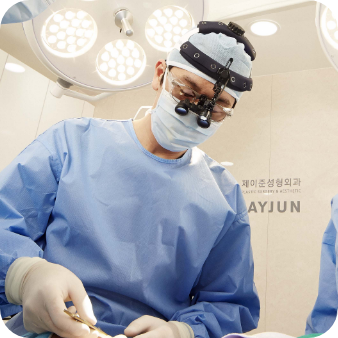
Professional collaborative care
Doctors, the surgical center, coordinators and the treatment center work within a professional, structured system for safety from consultation through postoperative care.

Minimal swelling and scarring, fast recovery
Experienced specialists minimize swelling, supported by aftercare from trained staff to help you return to daily life quickly.

Eye surgery with high patient satisfaction
Specialists operate with a sense of responsibility for the result, achieving high satisfaction and a low revision rate.

Specialist medical staff committed to research
The refined, precise surgical expertise of JAYJUN plastic surgery specialists delivers satisfying results.
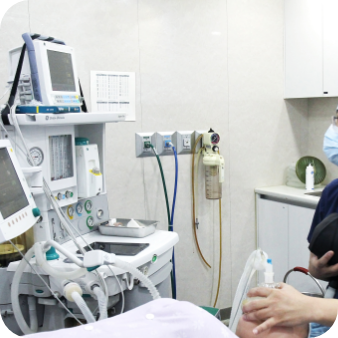
Dedicated one-to-one anesthesia care
An anesthesiology and pain medicine specialist takes dedicated responsibility for anesthesia during surgery, with an emergency response system for safety.