



Eyelid surgery
How is a double eyelid crease planned?
Discuss your preferred appearance and what is feasible for your eyes before choosing a crease height or shape.
A double eyelid crease is planned around your preferred height and shape, skin, existing folds, inner-corner anatomy and eyelid opening function. One measurement or crease style does not suit everyone.
If you have found a photo you like, go beyond asking for the same eyes. Separate the features you like from the changes you want to avoid so the consultation has a clear starting point.
Key points
Three things to know before planning a crease
- Crease height and the width visible with the eyes open are different.
The same requested measurement can look different with different anatomy.
- A style name alone does not define a surgical plan.
Discuss how the crease starts near the inner corner and continues outward.
- Reference photos and temporary crease demonstrations help communication.
Neither the photographed eyes nor a temporarily formed fold guarantees the final result.

Does choosing a height settle the whole design?
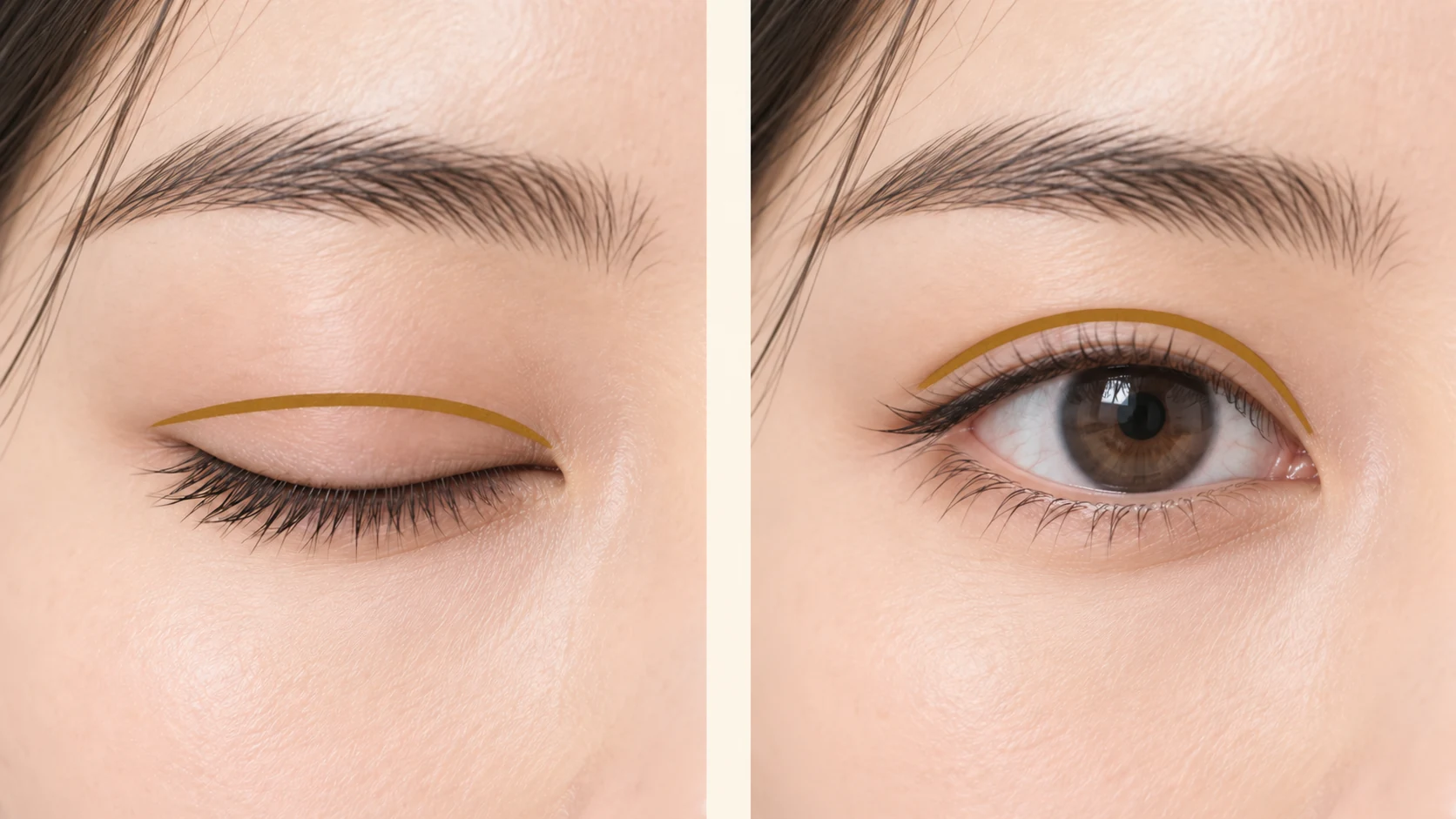
Discuss the planned line with the eyes closed separately from the crease width visible with the eyes open. When you ask for a more defined look, clarify whether you mean greater height or a more visible inner portion.
The way an eyelid folds depends on the relationship between skin and underlying tissues. AAO EyeWiki’s explanation of double eyelids describes this anatomical variation. Treat it as background for individual planning rather than a measurement to apply to yourself.
How can you explain an infold, an in–out fold or an outfold?
These terms help describe preferences, but check that you and your clinician understand them the same way. Discuss the inner starting point, central width and outward continuation separately.
The inner-corner skin fold and existing eyelid structure are among the features considered during planning. AAO EyeWiki’s preoperative assessment guide discusses these structures. A requested style alone does not establish that another procedure is necessary.
| Part of the design | Example of a preference | A question to ask |
|---|---|---|
| Inner starting point | I would like the inner part to be more visible. | What is feasible with my current inner-corner anatomy? |
| Central width | I do not want the crease to look too wide with my eyes open. | How do you distinguish planned height from visible width? |
| Outer continuation | I would like a smooth continuation toward the outer corner. | How will existing folds and differences between the eyes affect planning? |
Preparing reference photos
Mark the parts you like in a few photos. You may prefer the inner starting point in one and the central width in another. Use the photos to explain individual preferences rather than treating a whole image as the one correct answer.
Ask about the recommended method, realistic expectations and risks. The ASPS consultation question guide offers a starting point, but another person’s result does not predict your own.
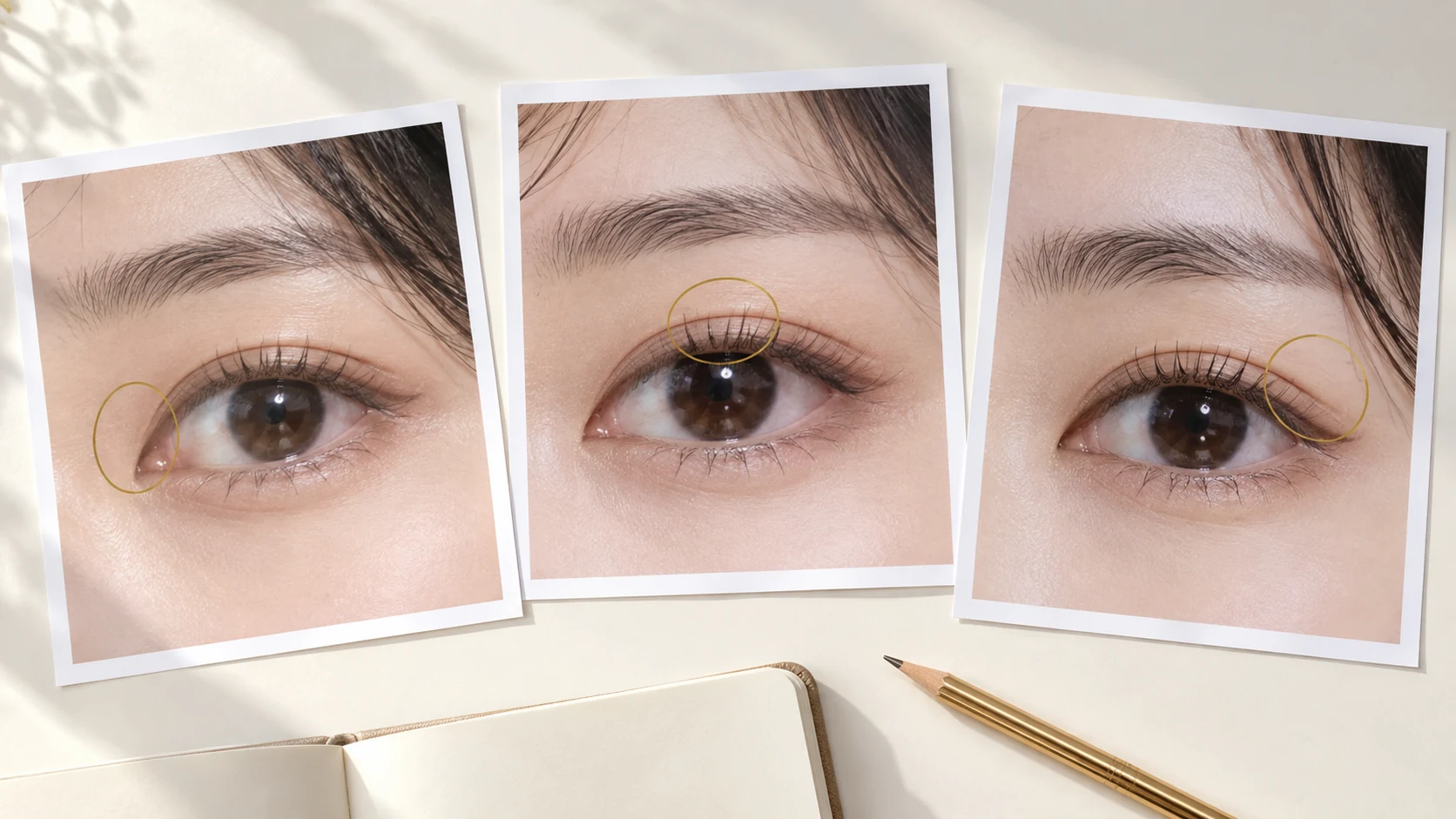
- Describe the preferred height, inner starting point and outer continuation separately.
- Explain changes you wish to avoid, such as an overly prominent or wide fold.
- Mention existing asymmetry, previous surgery and discomfort such as dryness.
- Ask how a consultation demonstration may differ from the actual result and what its limits are.
Be specific about what “natural” means to you
People mean different things by a natural look. Explain whether you want a subtle crease without makeup, to preserve your current expression, or to address concern about marks when your eyes are closed.
Appropriate planning cannot eliminate the possibility of scarring, asymmetry or crease changes. Use the ASPS eyelid surgery risk information to discuss the risks relevant to you. Clarifying your preference and deciding on surgery are separate steps.
Frequently asked questions
What height in millimetres looks most natural?
There is no single measurement for everyone. Distinguish the planned line height from the width seen with the eyes open, and discuss your anatomy and preferred appearance together.
Does an outfold always require epicanthoplasty?
A crease name alone cannot decide an additional procedure. Ask about the desired inner starting point, what is feasible, and the reasons and risks for any other procedure being considered.
Will the demonstrated crease be the final result?
A temporary fold can help communicate preferences but does not guarantee the final result. Ask what may differ with the surgical plan and healing.
Can both eyes be made completely identical?
Perfect symmetry cannot be guaranteed. Discuss pre-existing differences, what the plan may address and what differences may remain.
Describe the crease you like in your own words
Before consultation, write down which features you want to change and which changes you want to avoid. Then discuss what is feasible for your eyes and how it might be achieved to make expectations more specific.
Surgical methods, outcomes and recovery vary between individuals. Risks include swelling, bruising, bleeding, infection, scarring, asymmetry, dry eyes and difficulty closing the eyes. Rarely, serious problems such as changes in vision can occur. Your individual condition and risks require clinical assessment.