



Revision eyelid surgery
JAYJUN PLASTIC SURGERY
JAYJUN
Revision eyelid surgery
If double eyelid or canthal surgery went wrong or you are unhappy with the shape,
revision surgery can improve the eyes toward your desired appearance.
Revision surgery requires an accurate diagnosis of why the previous surgery failed and a procedure suited to that cause. For a satisfactory outcome, choose a specialist with extensive clinical experience.

Revision eyelid surgery at JAYJUN
Surgery information
- Operating time
- 1 hour 30 minutes–2 hours
- Anesthesia
- Short-duration sedation
- Hospital stay
- Discharge the same day
- Stitch removal
- After 5–7 days
- Recovery period
- Daily activities possible the same day
- Bleeding, bruising and other side effects may occur depending on individual circumstances, and recovery times may vary.
Revision eyelid surgery at JAYJUN
Timing, types and considerations
Timing of revision eyelid surgery
- At least 6 months after the first operation
- If inflammation occurs, after it has subsided
- If a poor result is anticipated early after surgery, within 2 weeks, before the tissue becomes firm
- Early correction may be possible in some cases, but revision is best performed after the tissue at the surgical site has stabilized
Types of revision eyelid surgery
- Revision double eyelid surgery
- Canthal surgery and restoration
- Revision ptosis correction
Factors to assess before revision
- Available skin
- Thickness of the skin and orbicularis oculi muscle
- Scars and adhesions at the previous surgical site
- Strength of the levator palpebrae superioris muscle
- Amount of orbital fat
- Outward or inward turning of the eyelashes
- Careful specialist assessment and an individualized 1:1 surgical plan
Revision eyelid surgery at JAYJUN
When revision may be needed
| Crease |
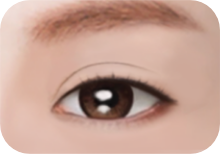
High crease |
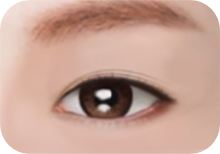
A loosened crease |
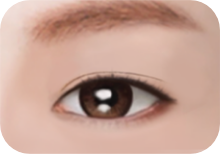
Uneven crease heights between the eyes |
|---|---|---|---|
| Cause | The double eyelid crease was made too high, or too much skin was removed |
1. Thick skin, ptosis, sunken eyes, protruding eyes, pronounced epicanthal folds, small double eyelid creases, or severe astigmatism 2. Insufficient fixation during surgery |
1. The eyes differed in size or height before surgery 2. Differences in incision or fixation height, or in the amount of tissue removed |
| Correction |
1. If enough tissue remains, remove the scar and create a smaller crease 2. If tissue is insufficient, make a new incision below the old one, release the existing scar, and create a smaller crease |
Identify why the crease loosened, then perform revision surgery to create stronger tissue adhesion than before |
1. If skin sagging differs, adjust the amount of skin removed on each side 2. If eyebrow heights differ, remove skin on the opposite side after allowing sufficient time 3. If the asymmetry was caused by surgery, identify and correct the specific problem |
| Crease |
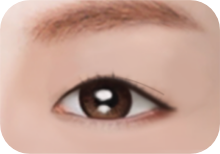
Low crease |
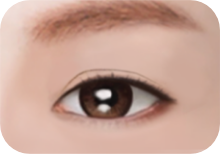
An unsatisfactory crease shape |
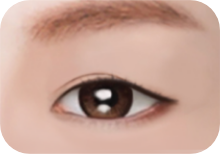
A sagging double eyelid crease |
|---|---|---|---|
| Cause |
1. The crease was made too low or has loosened 2. The eyelids have sagged over time |
Revision surgery is sought simply because the crease shape or height is unsatisfactory | Aging weakens the supporting muscles and reduces skin elasticity, causing a previously created crease to lose its shape |
| Correction |
1. Remove skin above the existing crease, including its scar 2. If the skin is sagging, a brow lift or endoscopic forehead lift is recommended |
Diagnose the cause through a thorough consultation with a specialist, then perform revision surgery | Consider the previous crease and technique, remove excess skin, and fix the muscle to restore the crease. Combine with a brow lift or endoscopic forehead lift if needed. |
High crease
(puffy, “sausage-like” eyelids)
- Cause The double eyelid crease was made too high, or too much skin was removed
-
Correction 1. If enough tissue remains, remove the scar and create a smaller crease
2. If tissue is insufficient, make a new incision below the old one, release the existing scar, and create a smaller crease
A loosened crease
-
Cause 1. Thick skin, ptosis, sunken eyes, protruding eyes, pronounced epicanthal folds, small double eyelid creases, or severe astigmatism
2. Insufficient fixation during surgery - Correction Identify why the crease loosened, then perform revision surgery to create stronger tissue adhesion than before
Uneven crease heights between the eyes
-
Cause 1. The eyes differed in size or height before surgery
2. Differences in incision or fixation height, or in the amount of tissue removed -
Correction 1. If skin sagging differs, adjust the amount of skin removed on each side
2. If eyebrow heights differ, remove skin on the opposite side after allowing sufficient time
3. If the asymmetry was caused by surgery, identify and correct the specific problem
Low crease
(hidden double eyelid)
-
Cause 1. The crease was made too low or has loosened
2. The eyelids have sagged over time -
Correction 1. Remove skin above the existing crease, including its scar
2. If the skin is sagging, a brow lift or endoscopic forehead lift is recommended
An unsatisfactory crease shape
- Cause Revision surgery is sought simply because the crease shape or height is unsatisfactory
- Correction Diagnose the cause through a thorough consultation with a specialist, then perform revision surgery
A sagging double eyelid crease
- Cause Aging weakens the supporting muscles and reduces skin elasticity, causing a previously created crease to lose its shape
- Correction Consider the previous crease and technique, remove excess skin, and fix the muscle to restore the crease. Combine with a brow lift or endoscopic forehead lift if needed.
Revision eyelid surgery at JAYJUN
Features
-
Personalized 1:1 eyelid surgery
Accurately diagnose problems from the previous operation and provide personalized 1:1 surgery to avoid further revisions
-
Performed by an experienced specialist
A range of surgical techniques based on extensive eyelid surgery experience provides highly satisfying results
-
Minimized scarring
Use a surgical approach that minimizes tissue damage and scarring

Revision eyelid surgery at JAYJUN
Channel JAYJUN
Revision eyelid surgery at JAYJUN
FAQ
Answers to frequently asked questions about revision eyelid surgery.
When might revision eyelid surgery be needed?
Revision may be considered when results after double eyelid or canthal surgery are unsatisfactory, the crease is too high or low, has loosened, is asymmetric, or has sagged over time.
When can I have revision eyelid surgery?
In general, revision is best considered at least 6 months after the first surgery, once the tissue has stabilized. If inflammation occurs, it must settle first. If a poor outcome is anticipated from the early postoperative stage, correction may be possible within 2 weeks, before the tissue becomes firm.
What types of revision eyelid surgery are available?
Options include revision double eyelid surgery, canthal surgery and restoration, and revision ptosis correction. The approach is selected according to the problems from the previous surgery and the current eye condition.
Can an excessively high double eyelid crease be revised?
If the crease is too high or has a puffy, “sausage-like” appearance, revision may be performed after assessing the cause and tissue condition. With enough tissue, the scar is removed and a lower crease created. If tissue is insufficient, the existing scar can be released before a new crease is made.
Can a loosened double eyelid crease be revised?
After accurately identifying why the crease loosened—such as skin thickness, ptosis, eye shape, or the previous fixation—revision can create stronger tissue adhesion than before.
Can revision surgery improve uneven double eyelid creases?
When crease heights differ, eye size and height, skin sagging, previous incision and fixation height, and tissue removal are assessed. The amount of skin removed on each side can then be adjusted, or specific issues corrected according to the cause.
Can a very low or hidden double eyelid crease be revised?
A low or hidden crease can be corrected by removing the skin above it, including the scar from the existing crease. If skin sagging is also present, a brow lift or endoscopic forehead lift may be considered.
What is assessed when planning revision eyelid surgery?
An individualized 1:1 plan should consider available skin, the thickness of the skin and orbicularis oculi muscle, scars and adhesions from previous surgery, levator palpebrae superioris strength, orbital fat volume, and outward or inward turning of the eyelashes.
How long does revision eyelid surgery take, and what anesthesia is used?
Revision eyelid surgery takes approximately 1 hour 30 minutes to 2 hours and is performed under short-duration sedation.
What is recovery like, and when are stitches removed after revision eyelid surgery?
You can go home and resume daily activities on the day of surgery. Stitches are usually removed around 5–7 days afterward. Bleeding or bruising may occur, and recovery time can vary depending on your condition.
What sets JAYJUN eye surgery apart
Your JAYJUN, a standard of beauty

One-to-one, personalized eye surgery
Considering the balance and harmony of your eyes and face, we apply the most suitable surgical method.
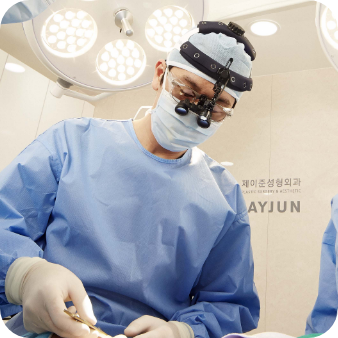
Professional collaborative care
Doctors, the surgical center, coordinators and the treatment center work within a professional, structured system for safety from consultation through postoperative care.
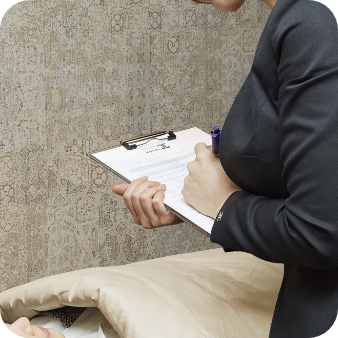
Minimal swelling and scarring, fast recovery
Experienced specialists minimize swelling, supported by aftercare from trained staff to help you return to daily life quickly.

Eye surgery with high patient satisfaction
Specialists operate with a sense of responsibility for the result, achieving high satisfaction and a low revision rate.

Specialist medical staff committed to research
The refined, precise surgical expertise of JAYJUN plastic surgery specialists delivers satisfying results.
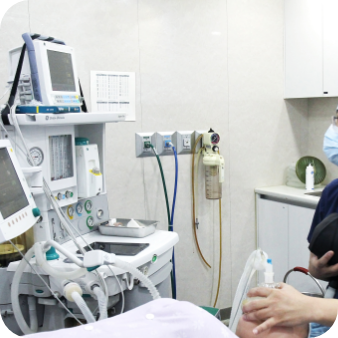
Dedicated one-to-one anesthesia care
An anesthesiology and pain medicine specialist takes dedicated responsibility for anesthesia during surgery, with an emergency response system for safety.