




JAYJUN
Lower eyelid surgery
Rejuvenating eyelid surgery for middle-aged and older adults whose sagging, uneven skin and tissues around the eyes make them look older
When needed, JAYJUN combines this procedure with lateral canthopexy to prevent complications of lower eyelid surgery.

Lower eyelid surgery at JAYJUN
Surgery information
- Operating time
- 1 hour
- Anesthesia
- Sedation, local anesthesia
- Hospital stay
- Discharge the same day
- Stitch removal
- 5–7 days
- Recovery period
- Daily activities after suture removal
- Bleeding, bruising and other side effects may occur depending on individual circumstances, and recovery times may vary.
Lower eyelid surgery at JAYJUN
Who may need lower eyelid surgery

- When deep under-eye wrinkles create shadows
- When the under-eye area bulges or sags
- When severe skin sagging makes you look older than your age
When is lateral canthopexy performed? JAYJUN does not perform lateral canthopexy with every under-eye operation. An accurate assessment identifies cases that need it, to prevent complications and achieve high-quality results in lower eyelid surgery.
Lower eyelid surgery at JAYJUN
Surgical technique
Lower eyelid surgery technique
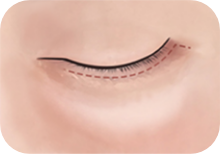
Assess loose skin and the shape of the fat, determine how much skin to remove, and plan the incision
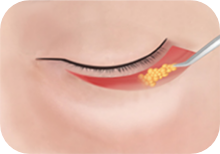
Make an incision close to the lower lash line, remove loose or excess skin and fat, and reposition the remaining fat
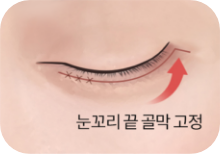
Secure the lax muscle to the periosteum to eliminate wrinkles, then close the incision
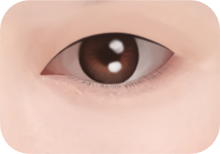
Achieve a brighter, firmer under-eye area
Lateral canthopexy technique
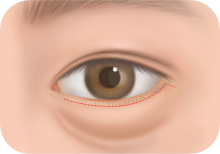
Make a fine, precise incision below the eyelashes, extending to the outer corner of the eye
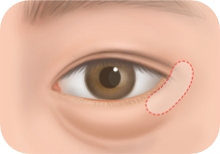
Dissect the outer canthal area and the orbital periosteum
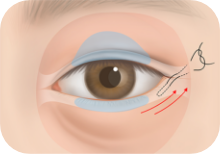
Secure the lateral canthal tendon or orbicularis oculi muscle to the orbital periosteum
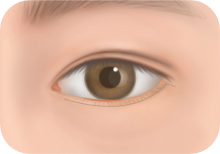
Remove excess skin and close with fine sutures
Lower eyelid surgery at JAYJUN
Why is lateral canthopexy performed?
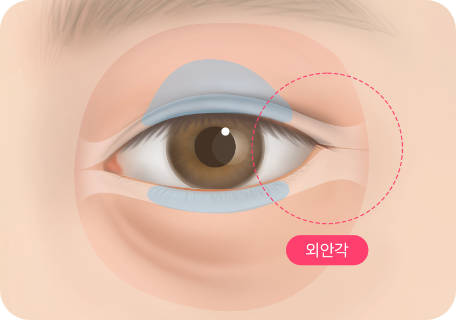
JAYJUN lateral canthopexy helps prevent lower eyelid surgery complications and improve the quality of under-eye surgery
As aging progresses, the lateral canthal tendon stretches and the under-eye area loses firmness and sags.
JAYJUN lateral canthopexy secures the lateral canthal tendon or orbicularis oculi muscle surrounding the outer corner of the eye to the orbital periosteum.
This can prevent ectropion (outward turning of the lower eyelid), which may occur after lower eyelid surgery.
At JAYJUN, lateral canthopexy is added to lower eyelid surgery when needed. The decision is made after consultation with a plastic surgery specialist.
- Firm lateral canthal fixation provides lifting and helps prevent recurrent sagging
- More thorough under-eye surgery that also corrects the muscle
Lower eyelid surgery at JAYJUN
Features
-
A softer, clearer expression
Remove deep tear troughs and wrinkles caused by lax, sagging tissue that creates a shadowed appearance
-
Scars that are not visible
A fine incision below the lower eyelashes reduces concerns about scarring
-
A younger appearance
Remove and reshape bulging, loose excess tissue that makes the face look older to achieve balanced volume and a neat eye contour

Lower eyelid surgery at JAYJUN
Channel JAYJUN
Lower eyelid surgery at JAYJUN
FAQ
Answers to frequently asked questions about lower eyelid surgery.
What is lower eyelid surgery?
This surgery corrects sagging under-eye skin, bulging fat, and fine wrinkles to create a younger, clearer eye appearance. Fat repositioning or skin removal is included as needed.
Who is this surgery for?
It is mainly for middle-aged and older adults whose bulging or hollow under-eye areas make them look tired, whose deep tear troughs create a sad appearance, or whose loose under-eye skin makes them look older than their age.
How does lower eyelid surgery differ from under-eye fat repositioning?
Lower eyelid surgery includes skin removal, whereas under-eye fat repositioning mainly adjusts the position of fat. Lower eyelid surgery is therefore more suitable when skin sagging is severe. Learn about under-eye fat repositioning
How is the surgery performed?
An incision is made below the lower eyelashes to adjust or remove fat. Loose skin is removed if needed, and the incision is closed.
How long does recovery take?
Daily activities can usually be resumed after 1–2 weeks, and most major swelling subsides within 2–4 weeks.
Will there be noticeable scarring?
The incision lies below the eyelashes, so it tends to be less noticeable and fades over time.
Is the pain severe?
Anesthesia prevents pain during surgery. Afterward, you may feel mild soreness or a pulling sensation.
What side effects or complications can occur?
Swelling, bruising, under-eye tightness, increased tearing, and dry eyes are temporary effects that may occur during recovery. Undercorrection, overcorrection, or, rarely, ectropion can also occur.
How long do the results last?
This depends on the condition of your skin and tissues around the eyes. Natural aging continues over time, but results last approximately 5–10 years.
What precautions should I take after surgery?
Avoid alcohol, smoking, strenuous exercise, and saunas during the early recovery period, and follow the clinic's instructions. Read the postoperative care instructions
What sets JAYJUN eye surgery apart
Your JAYJUN, a standard of beauty

One-to-one, personalized eye surgery
Considering the balance and harmony of your eyes and face, we apply the most suitable surgical method.
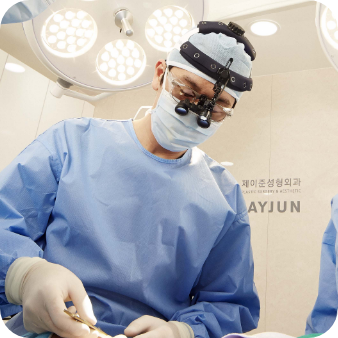
Professional collaborative care
Doctors, the surgical center, coordinators and the treatment center work within a professional, structured system for safety from consultation through postoperative care.

Minimal swelling and scarring, fast recovery
Experienced specialists minimize swelling, supported by aftercare from trained staff to help you return to daily life quickly.

Eye surgery with high patient satisfaction
Specialists operate with a sense of responsibility for the result, achieving high satisfaction and a low revision rate.

Specialist medical staff committed to research
The refined, precise surgical expertise of JAYJUN plastic surgery specialists delivers satisfying results.
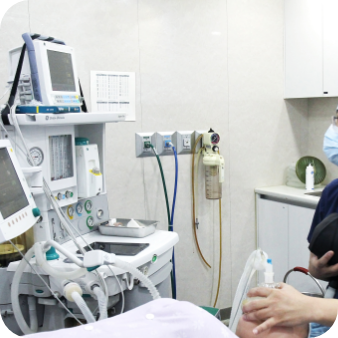
Dedicated one-to-one anesthesia care
An anesthesiology and pain medicine specialist takes dedicated responsibility for anesthesia during surgery, with an emergency response system for safety.