



Rhinoplasty: should the front view or the profile come first?
A rhinoplasty plan needs to consider the front and side views together, alongside the whole face and breathing.
A rhinoplasty plan needs to consider the front and side views together, alongside the whole face and breathing. A higher bridge in profile does not necessarily address frontal width or nostril asymmetry. Describe what bothers you in each view so you can ask which structures would change and what limitations would remain.
Key points
Three points to separate
- Different views show different information.
Frontal width and alignment differ from profile height and projection.
- Do not choose height in isolation.
Discuss the tip and bridge in relation to the forehead, mouth and chin.
- Explain appearance and function.
Mention obstruction, previous surgery and injuries as well as your preferences.

Why do front and side views raise different questions?
The front view helps show alignment, contours, width and nostril visibility. The profile helps show bridge and tip projection and their relationship with the forehead, mouth and chin. Rather than assigning one view priority for everyone, ask whether the goals are compatible across both views.
The American Society of Plastic Surgeons' rhinoplasty information discusses facial proportions, several nasal features and structural breathing problems. A photograph from a particular angle does not determine an individual's operation.
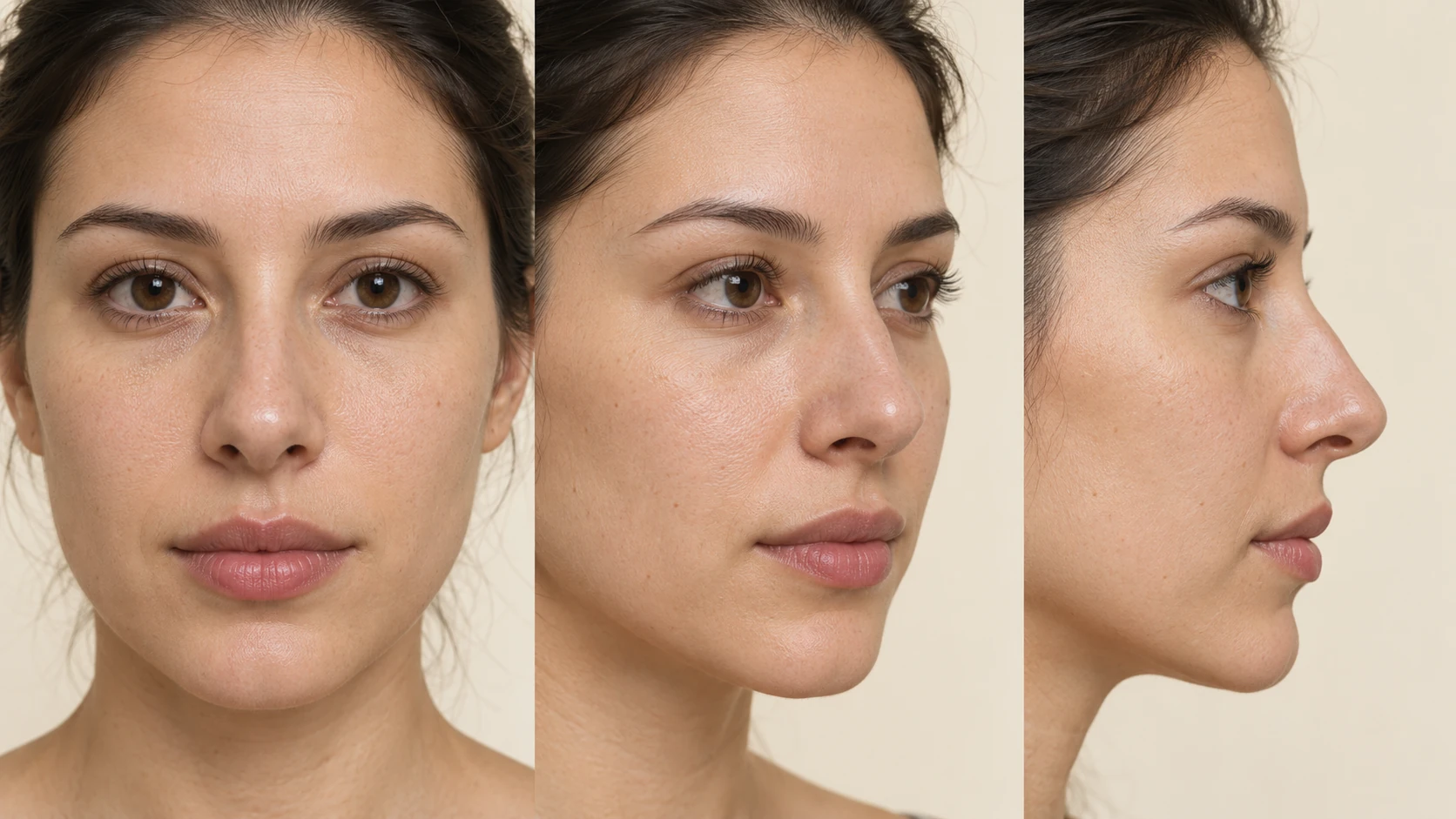
Does increasing profile height also narrow the front view?
Height and width are different adjustments. Ask which structures a bridge or tip plan changes and how that might appear from the front. Bone, cartilage, nostril base and skin can involve different approaches and limitations. Do not diagnose a need for bone surgery or alar reduction from photographs alone.
| Preference to explain | Question to discuss |
|---|---|
| Width in the front view | Which area appears wide, and what would the plan change? |
| A low-looking tip in profile | Are we discussing height, projection or rotation? |
| Unequal sides | How do natural asymmetry and camera angle contribute? |
How should you bring reference photographs?
Bring front, side or oblique images that illustrate your concern and the features you prefer. Strong filters or retouching can misrepresent skin and contours. Combining front and side photographs of different people does not mean their features can be reproduced exactly on your face.

- Separate the view you want to change from features you want to preserve.
- Ask how a change could affect other views and what limits remain.
- Ask why a particular extent, material or approach is proposed, and discuss alternatives.
When should you mention nasal obstruction?
Mention it at the first consultation. Appearance goals and the cause of breathing discomfort can be discussed together without assuming they are the same problem. The ASPS consultation guide includes appearance and breathing goals, health, medicines and previous operations. Cosmetic contour changes alone should not be expected to resolve obstruction.
Frequently asked questions
Is one front-view photograph enough?
It can introduce your concern, but cannot assess nasal structure, skin and breathing by itself. Ask what examination and photographs are needed.
Will a higher tip make my face look smaller?
This article does not promise that effect. Discuss overall proportions, the changes you want in both views and the limitations that may remain.
Can both sides become perfectly identical?
Natural facial and nasal asymmetry may remain. An examination is needed to discuss possible changes and areas that are difficult to correct.
Ask what would change in each view
There is no single correct view to choose first. Explain concerns by angle, features to preserve and breathing discomfort, then ask how the proposed plan addresses them.
This is general consultation information, not a diagnosis or an individual surgical recommendation. Suitability, materials, extent and recovery vary with assessment. Risks include bleeding, infection, scarring, pigmentation changes, asymmetry, altered sensation, breathing difficulty, material-related problems and further surgery. No particular shape or view is guaranteed.