



Men's eyelid consultation: how do you explain work and appearance goals?
Separate the appearance you want from the practical demands of your work.
Separate the appearance you want from the practical demands of your work. “Make it unnoticeable” does not define crease shape, function or recovery. Being male does not determine one crease design or a short return-to-work period, and surgery cannot promise better workplace evaluations or relationships.
Key points
Three topics for consultation
- Describe appearance through specific features.
Separate what you want to keep from what you want to change.
- Describe work through activities.
Screen use, driving, meetings and physical work create different demands.
- Separate shape from function.
A preference for a thin crease does not determine eye-opening correction or surgical extent.
Does “natural” mean the same thing for everyone?
For one person it means less visible crease; for another it means preserving their existing eye features. Explain crease visibility, the appearance when opening your eyes comfortably and features you want preserved. There is no single ideal eyelid for all men or occupations.
The American Society of Plastic Surgeons' planning guide for men encourages specific communication about desired changes and reasons. It does not establish that surgery guarantees professional success or particular social reactions.
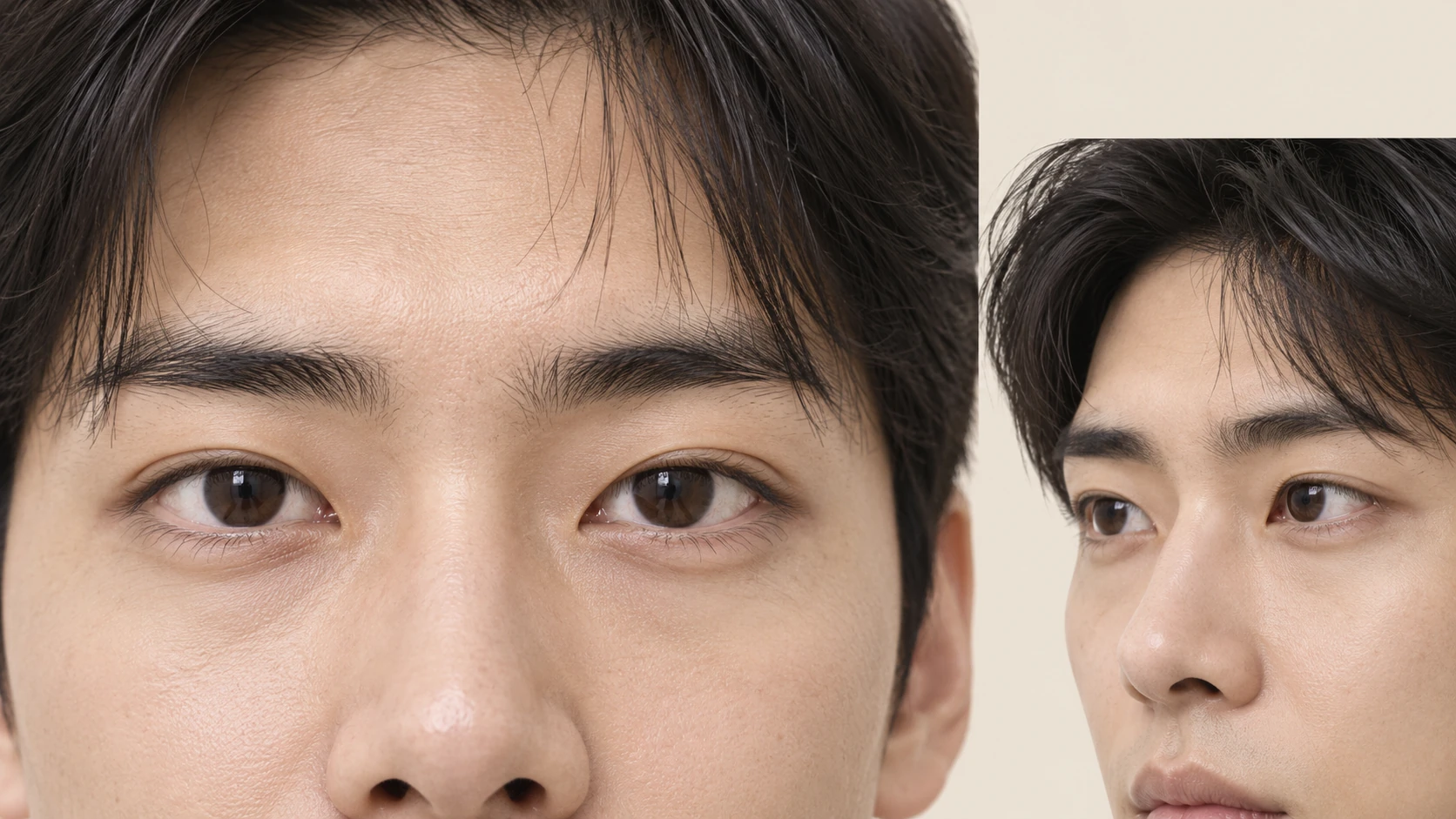
Does a thin crease mean simpler recovery?
Crease preference is different from surgical extent and recovery burden. Skin, fat, brow position, eye-opening function and health affect planning. Ask which method is appropriate and what changes or limits may remain rather than assuming men's eyelid surgery is simple or invisible.
| Information to share | Specific question |
|---|---|
| Features you want to preserve | Which parts of my eyes would remain unchanged? |
| Preferred crease visibility | What is possible given the examination findings? |
| Eye-opening difficulty, dryness or eye treatment | Does eye health or function need assessment first? |
How should you explain work commitments?
Beyond a start date, mention prolonged screen use, driving, lifting or travel. Explain important meetings or photography separately if visible swelling matters. Consider follow-up attendance and whether you can rest or contact the clinic if symptoms occur.

- Ask how return is judged for each activity.
- Discuss the possibility of bruising or swelling at important events.
- Prepare follow-up, assistance and transport arrangements.
What else should you prepare?
List eye discomfort, contact lenses, ophthalmic treatment, past eye surgery, medicines and supplements. The ASPS eyelid consultation guide includes eye conditions, treatment, medicines and surgery as well as goals. Do not stop medicines yourself; obtain instructions from your treating team.
Frequently asked questions
Can I have surgery at the weekend and work on Monday?
This article cannot guarantee that schedule. Extent, health, job activities and recovery must be assessed before and after surgery.
Can my eyes look clearer without a double crease?
Explain your goal, but possible approaches and limitations require examination. First separate an eye-opening problem from an appearance preference.
Will nobody around me notice?
That cannot be guaranteed. Understand possible swelling, bruising, scars and shape changes before choosing a date.
Make appearance goals and daily demands specific
Translate “natural” into features to keep or change and work into actual activities and dates. Decide about surgery after understanding the expected changes, limitations and recovery plan.
This is general eyelid consultation information for male readers, not a diagnosis or personal surgical recommendation. Suitability, methods, work return and recovery vary with assessment and progress. Risks include bleeding, infection, scarring, asymmetry, difficulty closing the eyes, worsened dry eye, vision-related problems and further surgery. No appearance, professional benefit or return date is guaranteed.