



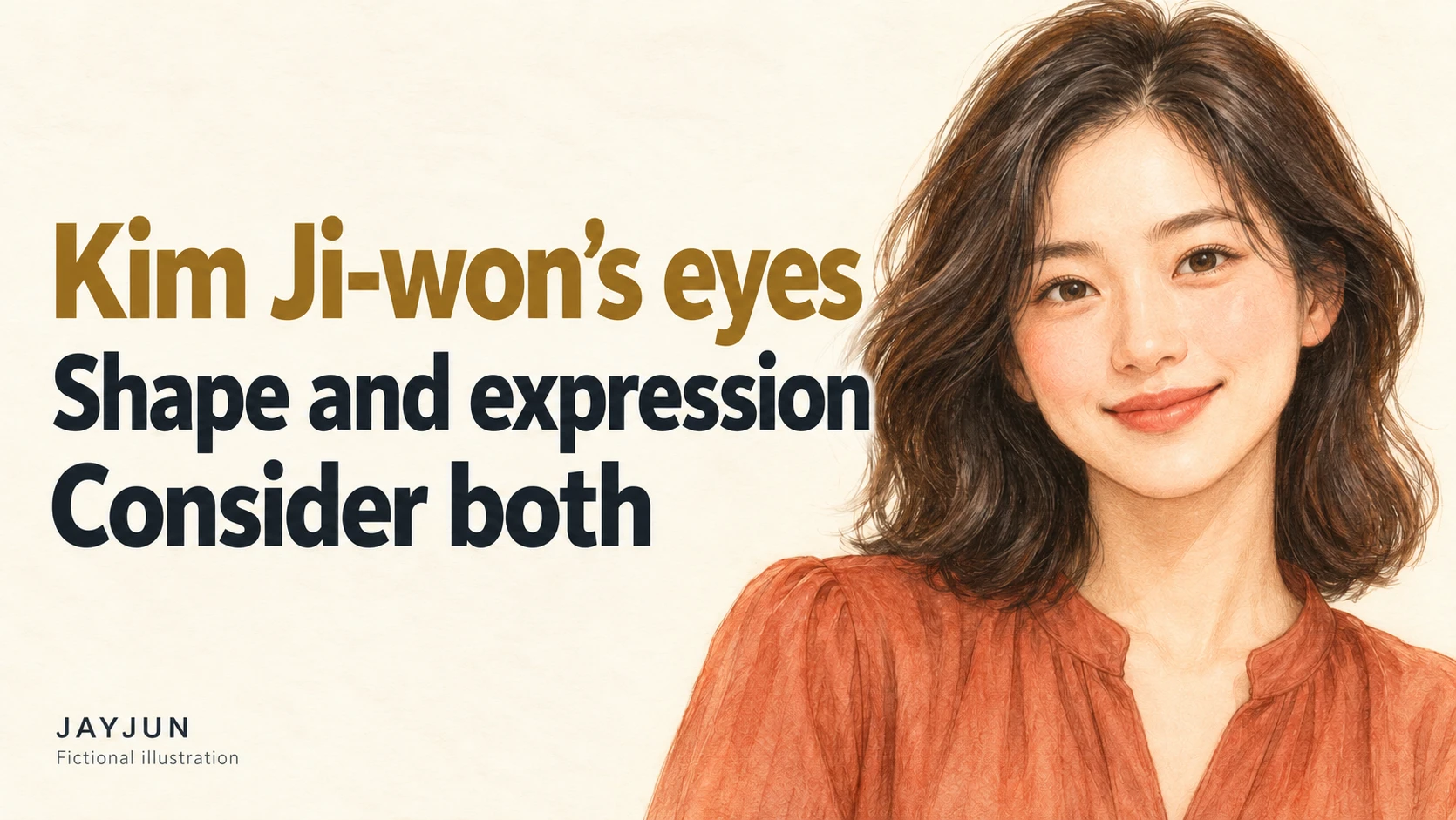
Curious about Kim Ji-won's eyes? Consider shape and expression together
Separate what you like in smiling and relaxed expressions, and prepare a consultation without treating one image as a surgical plan.
When an eye appearance appeals to you, recall the expression as well as the outline. A smiling scene featuring Kim Ji-won may express your preference, but creating a certain eye shape does not necessarily reproduce that expression or atmosphere.
The actor's name is an example for discussing personal preferences, not a statement about surgery, treatment history, or a relationship with this clinic. Images in this article are generated concepts, not photographs of the actor or surgical results.
Three points to organize
Three points to organize
- Identify whether the scene you like captures a smile or a relaxed expression.
- Describe both the eye area and the expression of the whole face.
- Do not turn a moment in a still image into a fixed surgical target.
Expression changes how the same person appears
A smile involves the cheeks and mouth as well as the eyes. Consider whether “soft-looking eyes” means an eye outline or the overall impression of a smile. A fleeting appearance in an actor’s photograph is not evidence of a medical condition or anatomical characteristic.
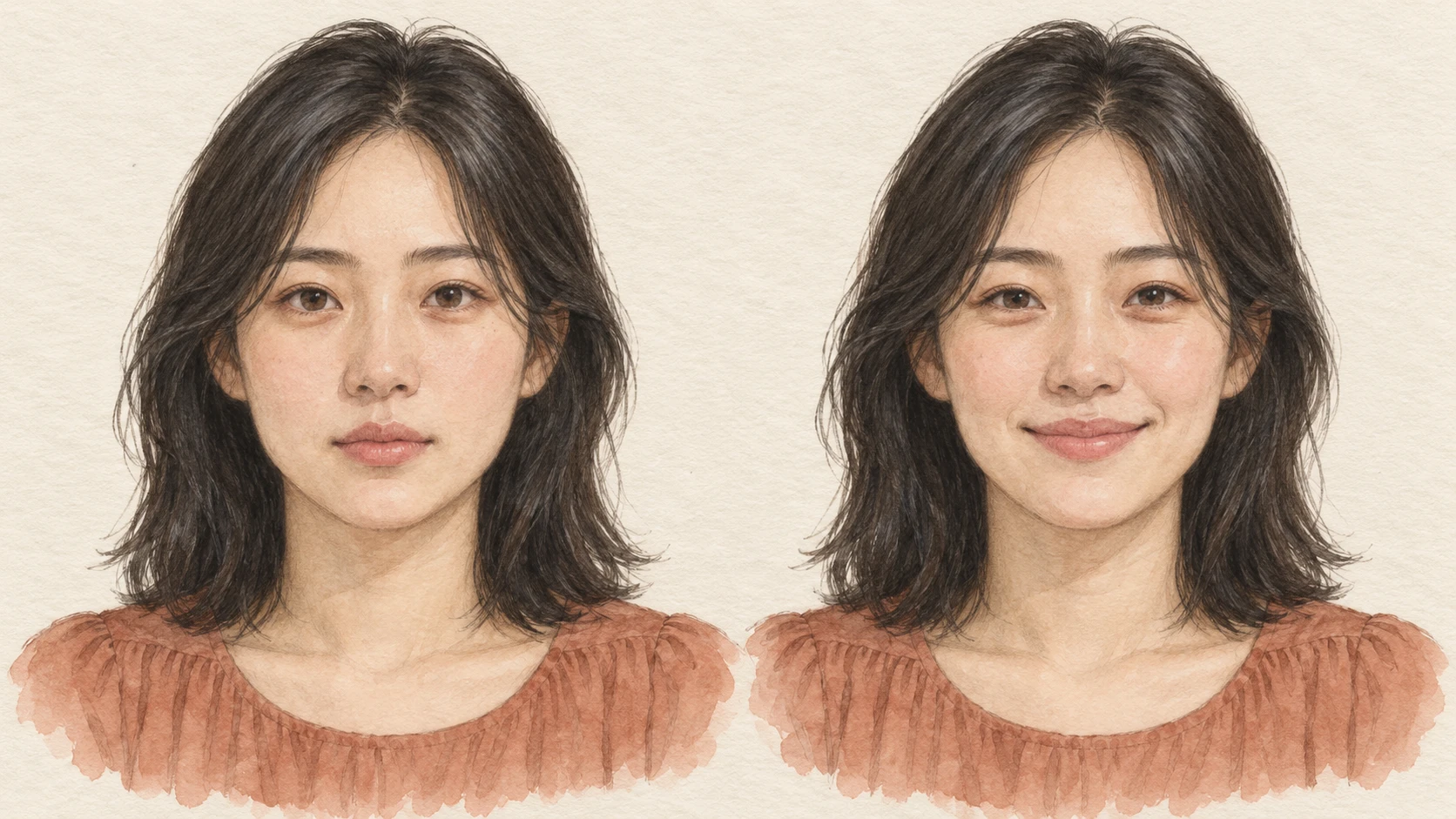
Separate a still moment from everyday goals
If you like an image, write one sentence about why. “I want my eyes to look larger” differs from “I want to look comfortable when smiling.” During assessment, discussing both relaxed eye opening and facial expressions can clarify which aspect of appearance you mean.
| What I like | Question for consultation |
|---|---|
| The relaxed feeling of a smiling scene | How do we distinguish the eye area from the whole expression? |
| The eye outline in daily life | What might change from my current condition? |
| My current natural smile | How will features I want to retain be considered? |
Ask again about promises to reproduce an expression
Do not expect surgery to recreate an actor’s smile or an impression associated with their personality. Ask what a proposed change means for a static shape and a moving expression, and what differences may remain. Mention what you already like in your smiling face so that preservation can be discussed.

Discuss both your goals and your current health
Photographs cannot establish eye function or suitability for surgery. Tell your clinician about dryness, discomfort opening or closing your eyes, previous treatment, and medicines you take.
The American Society of Plastic Surgeons consultation guide informs these preparation points. Before choosing a method, discuss possible changes, remaining limitations, risks, and the option of no surgery.
Frequently asked questions
Is a smiling photograph unsuitable as a reference?
It can be useful. Explain what you like about the moment and discuss it alongside your own eyes at rest.
Will changing eye shape make the smile the same?
An identical expression or atmosphere cannot be guaranteed. Ask about the scope of change and individual differences.
Is it a problem if the eyes look smaller while smiling?
An expression photograph cannot establish a problem. Report any discomfort separately from your appearance preference.
Put the scene you like into words
Identify which moment appeals to you in Kim Ji-won’s eyes. Distinguishing an outline, a smile, and your own features to retain can make the discussion more specific than asking to look identical.
This is general consultation-preparation information, not an individual diagnosis or a recommendation for surgery. Eye surgery carries risks including bleeding, infection, scarring, dryness, difficulty closing the eyes, and changes in vision. Outcomes and recovery vary; suitability and personal risks require clinical assessment. See the risk information. This article does not imply an endorsement by the actor or guarantee the same result.