



Can Han So-hee's eye impression be explained by an eyelid crease alone?
Organize consultation questions around eye impressions, personal features and function when using Han So-hee as a reference.
When describing eyes you admire, consider the overall impression around the eyes as well as the crease. If you like Han So-hee's eyes, first ask what draws your attention in a photograph. Liking the shape of a line and liking a mood created by expression or makeup lead to different consultation questions.
The actor's name is an example for discussing preferences. It does not imply surgery, treatment history, or any relationship with this clinic. A person's medical condition cannot be assessed from a photograph alone.
Key points
Three points to organize
- Put your preference into words.
Describe what you like and which features of your own eyes you want to retain, rather than specifying crease height alone.
- Reference photographs and examinations serve different purposes.
A photograph communicates taste; it cannot replace an assessment of discomfort or eye function.
- The same crease does not create the same face.
Discuss possible changes, limitations, and the option of having no surgery.
Do you like the line, or the overall mood?
You do not need to immediately assign a particular crease label to the appeal of a photograph. If a scene featuring Han So-hee appeals to you, consider whether the feeling you like remains the same in a crop of the eyes and in the whole face. This is a way to clarify your own preferences, not to grade the actor's appearance.
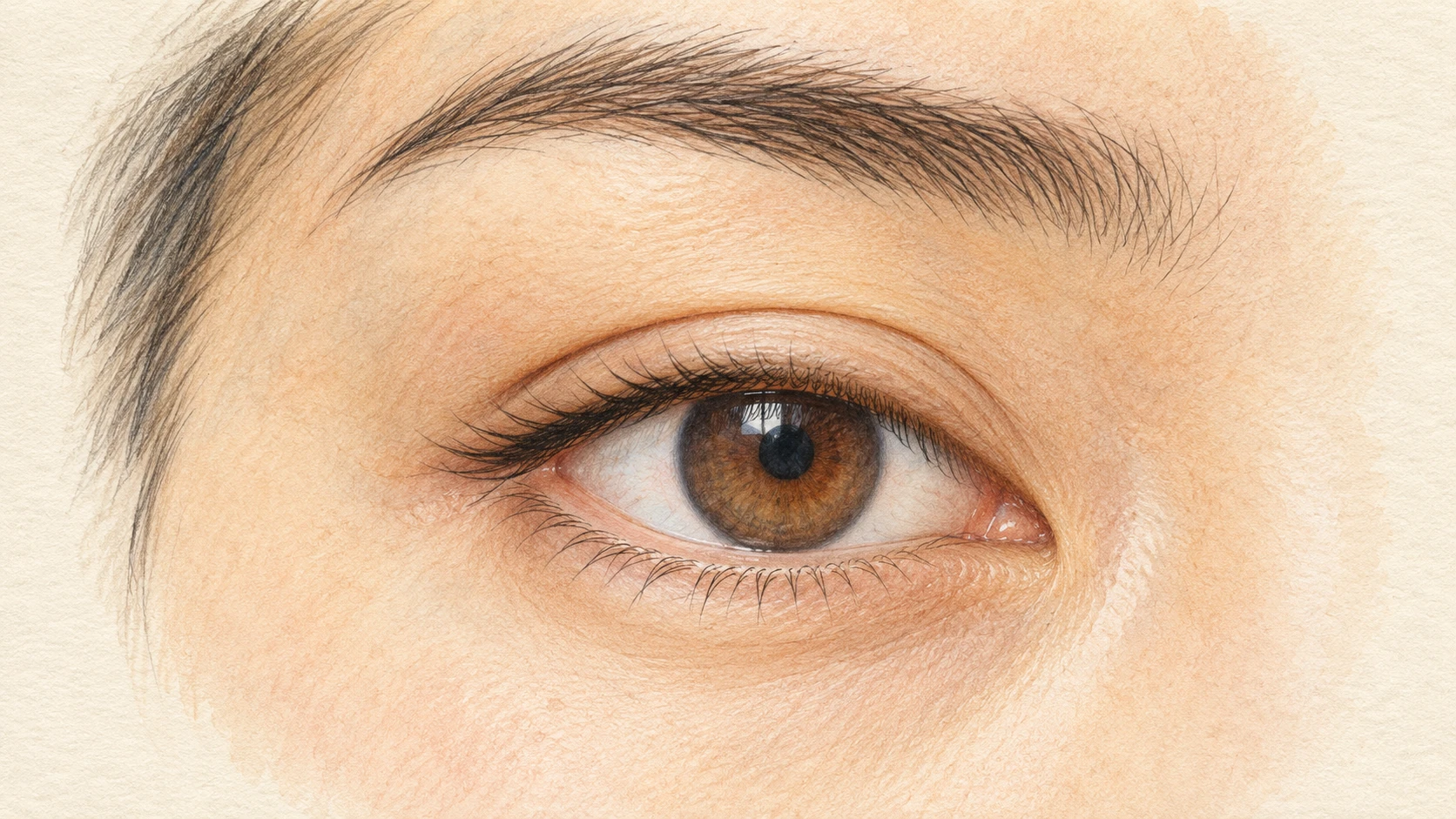
- Do you like how the crease appears near the inner corner?
- Do you like the definition around the eyes?
- Do you like a mood associated with a particular expression or makeup style?
There is no correct answer. Several preferences may overlap. It is also fine to tell the clinician that you find the impression difficult to describe.
A reference photograph has limits
A photograph helps explain a direction you like. It cannot establish someone else's eyelid tissue condition or need for surgery. Differences between your own photographs also should not automatically be treated as real changes when the shooting conditions differ.
Prepare a short note about what you like instead of assigning a surgical procedure to the actor in the photograph. This article neither establishes nor needs to establish whether that person has had treatment.
| Preference a photograph can communicate | What needs separate consideration |
|---|---|
| An impression you like around the eyes | What you want to change and retain |
| How visible you prefer the crease to be | What may be possible for your eyelids |
| An expression or style you like | Eye discomfort and previous treatment or surgery |
Prepare questions about appearance and eye health
Even with a preferred look in mind, photographs do not determine the surgical method. Tell your clinician about dryness, discomfort when opening or closing your eyes, and previous eye treatment or surgery. The American Society of Plastic Surgeons consultation guide likewise recommends discussing aesthetic goals alongside eye-related medical history.
Creating a crease you like and evaluating the cause of symptoms are different questions. Do not assume that changing a crease will also resolve a functional problem.
Bring both what you admire and what you want to preserve
Listing only changes can make it easy to overlook features you already like. Even when Han So-hee's eyes are your reference, the goal is to understand your preferences and circumstances together, rather than to reproduce another person's face.
You do not have to decide during one appointment. Ask again if an explanation is unclear, and allow time to consider whether your expectations are realistic.

- Write one or two sentences about what you like in the reference.
- Note what you would prefer to keep about your current eyes.
- Ask about achievable and difficult changes, risks, and the option of no surgery.
Frequently asked questions
Do I need to identify Han So-hee's crease type before my appointment?
No. Explaining what appeals to you is more useful than labeling a line in a photograph. A photograph does not establish a particular actor's actual anatomy or surgical method.
Would a similar crease create the same impression?
The same impression or outcome cannot be promised. Your whole face and individual circumstances matter; another person's photograph is not a guarantee of results.
Is it okay to finish a consultation without choosing surgery?
Yes. If the desired change is small, or the risks and recovery burden do not fit your expectations, you can consider not having surgery. Attending a consultation does not oblige you to proceed.
Turn an actor's name into your own questions
It is fine to start with “I like Han So-hee's eyes.” Then make the questions more specific: which impression appeals to you, what you want to preserve, and what range of change is possible. Reference photographs begin a conversation; an individual assessment and a thorough explanation should guide the eventual decision.
This is general consultation-preparation information, not a diagnosis or a recommendation for surgery. Eye surgery can involve bleeding, infection, scarring, dryness, difficulty closing the eyes, and vision changes. Outcomes and recovery vary. Individual suitability and risks require a clinical assessment. See the American Society of Plastic Surgeons risk information. This article does not represent the actor's endorsement or treatment results.