



Facial fat transfer: does the donor area also need planning?
Yes. Plan both the facial recipient area and the site where fat will be taken, including its care.
Yes. Plan both the facial recipient area and the site where fat will be taken, including its care. The choice depends on available fat, tissue, previous surgery and goals. No donor area is assumed to guarantee better fat survival. Ask about donor-site pain, bruising and contour changes too.
Key points
Three points to check
- Separate the donor site and face.
Harvesting fat and restoring facial volume have different purposes.
- Harvest volume does not guarantee facial results.
Processing, injection, tissues and variable absorption matter.
- Plan care for both sites.
Facial swelling alone does not describe the whole recovery.
How is the donor area chosen?
Fat may be taken from areas such as the abdomen or thighs, but the same site is not chosen for everyone. Available subcutaneous fat, skin, previous liposuction or scars, goals and the surgical plan require examination. Explain any preferred site without assuming it can necessarily be used.
The NHS surgical fat transfer guide describes harvesting, processing and transferring fat. It does not establish a ranking of donor-site survival or prove a clinic's results. The ASPS fat injection guide also discusses choosing a donor site before facial transfer, donor discomfort and possible further procedures. General survival descriptions are not personal percentages or permanent-result promises.
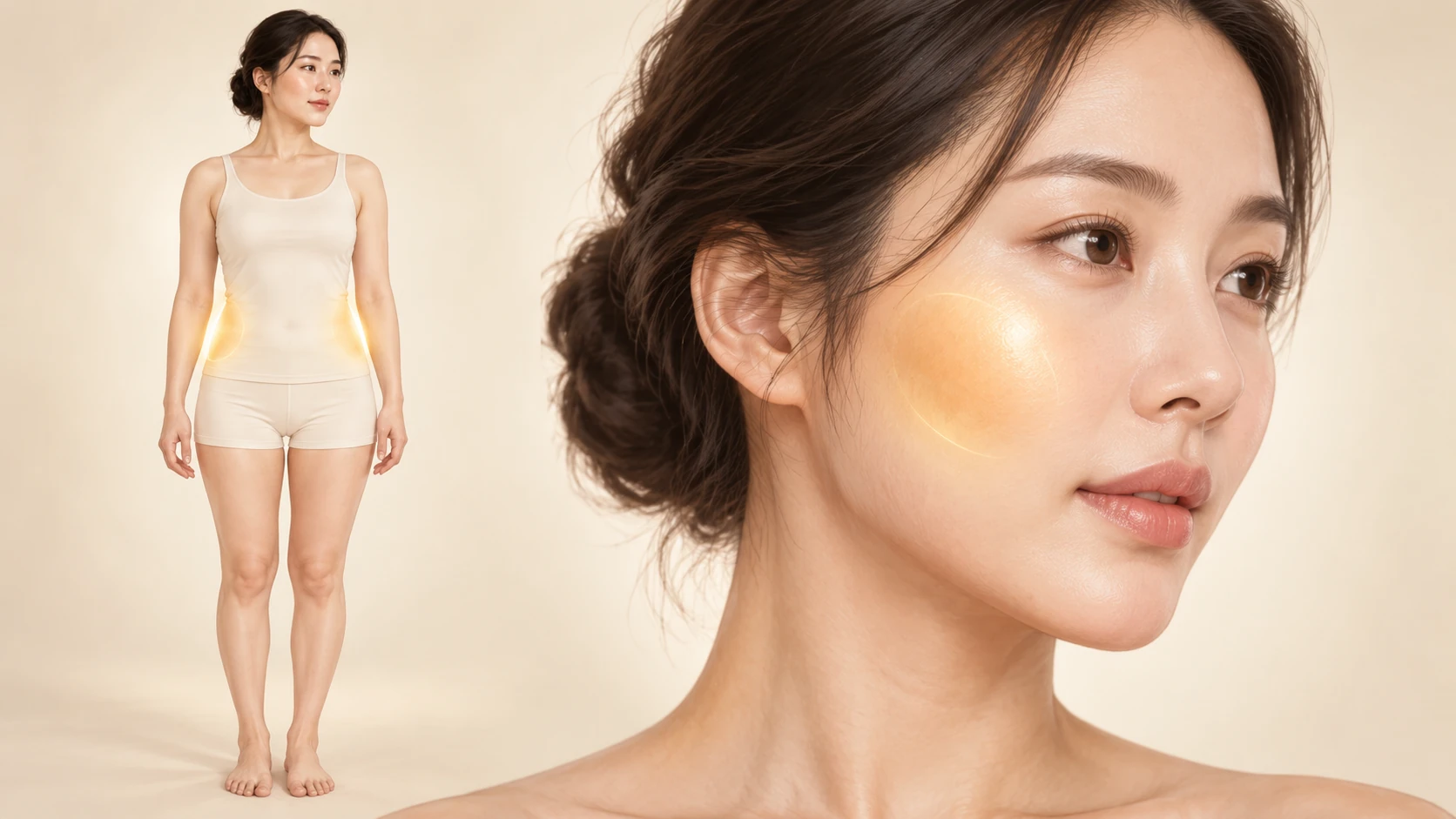
Will harvesting also substantially change body shape?
Taking fat for the face can differ in purpose and extent from contour-focused liposuction. Harvesting does not guarantee weight loss or a desired body shape. Ask about the intended area and risks including depressions, asymmetry and skin changes.
| Topic | Question to discuss |
|---|---|
| Donor location | Why this site, and do previous operations limit it? |
| Harvest extent | How does facial transfer differ from body contouring? |
| Recipient area | Where is fat proposed, why, and with what limits? |
How should thin build or previous liposuction be discussed?
Explain weight changes, dieting plans, and locations and dates of liposuction or fat transfer. Examination determines whether suitable fat is available and whether alternatives are needed. Do not rapidly gain or lose weight on your own to prepare; discuss the plan with your treating team.

- Identify previous donor and recipient areas and scars.
- Ask separately about pain, swelling, care and follow-up for the donor area and face.
- Discuss absorption, possible further treatment, and single versus other approaches.
Do donor-site risks need a separate explanation?
Yes. NHS information includes bruising, swelling, scarring, fat loss, infection and bleeding. The Cleveland Clinic under-eye fat transfer guide also describes very rare blood-flow blockage and vision injury from injection into a vessel. That guide concerns the under-eye area, not numerical risk comparisons across all facial sites. Ask for risks and emergency arrangements relevant to your recipient area. Severe pain or vision changes require immediate medical assessment rather than waiting for routine follow-up.
Frequently asked questions
Does thigh fat always survive better than abdominal fat?
This article does not claim one donor site is always superior. Ask why a site suits the available fat, tissue and surgical plan and about limitations.
If more fat is harvested, should more be placed in the face?
Harvest volume and suitable injection volume are separate questions. More volume does not guarantee better results; discuss the target tissues and goals.
Does previous liposuction rule out fat transfer?
Not by history alone. The area, extent, scars, remaining fat and tissue require assessment before discussing possible plans and alternatives.
Consider the face and donor area within one plan
Ask where and how much fat would be taken, as well as where it would go, with risks and care for both sites. Harvesting is not a guarantee of body contour improvement or fat survival.
This is general facial fat transfer consultation information, not a diagnosis or personal recommendation. Sites, amounts, recovery and absorption vary. Risks include bleeding, infection, scarring, pain, contour irregularities, asymmetry, fat necrosis, cysts, absorption, serious vascular complications and further treatment. No survival rate, body-shape change or volume is guaranteed.