



Are a facelift and a brow lift the same kind of lifting?
Their main areas and goals differ, so the phrase lifting the face does not make them the same plan.
Their main areas and goals differ, so the phrase lifting the face does not make them the same plan. Explain separately whether your concern is the brows and forehead or the lower cheeks and jawline. Combining both is not the default, and one operation does not change every area of sagging.
Key points
Three distinctions to make first
- Identify the area of concern.
Describe the brows and forehead separately from the cheeks and jawline.
- Ask about extent rather than names.
Establish which tissues and areas are addressed and what remains.
- Ask why a combined plan is suggested.
Discuss each need, alternative and additional burden separately.

Different goals can sit within the same word
The American Society of Plastic Surgeons' brow lift guidance describes goals involving forehead and frown lines and lowered brows. Its facelift guidance discusses facial and neck laxity, lower cheeks, jawline and tissue-position changes. Confirm the actual extent through an individual examination and surgical plan.
Visible forehead lines do not automatically require a brow lift, just as a less defined jawline does not establish a need for a facelift. Assess whether skin, brows, eyelids and volume contribute together.
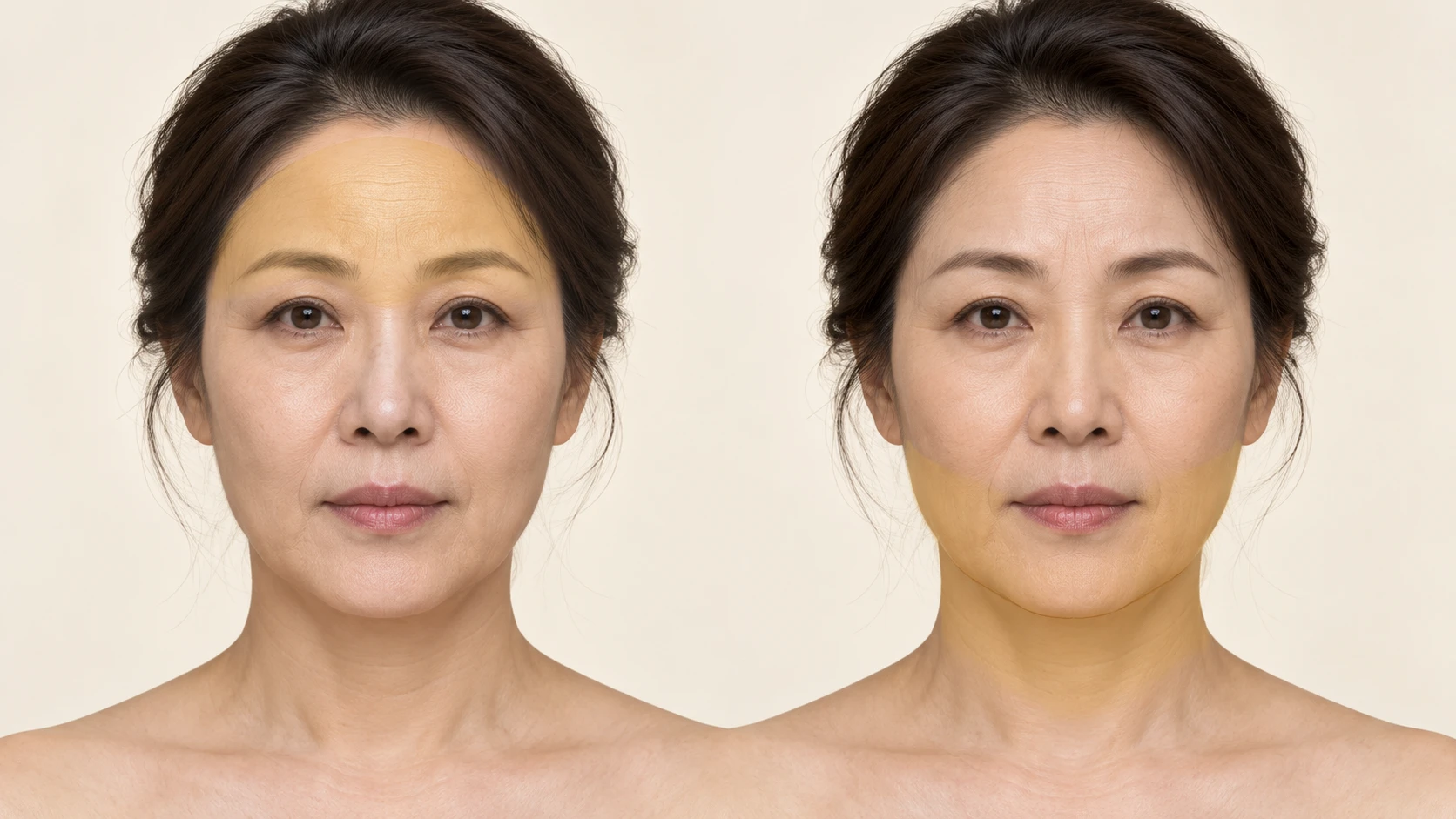
Does a heavy-looking eye area mean choosing a brow lift?
Brow position, eyelid skin and eye-opening function are distinct assessment elements. Feeling that the area looks more comfortable when you lift the brow by hand can explain a preference; it is not a test of surgical suitability or a demonstration of the result.
If eyelid surgery or volume treatment is also discussed, ask about each goal and its remaining limitations instead of simply adding names. Do not interpret the plan as removing every wrinkle or hollow.
| Area to describe | Question to clarify |
|---|---|
| Forehead, frown area and brows | How is the relationship between brow position and the eyelids assessed? |
| Lower cheeks, jawline and neck | Which tissue-position changes does the plan address? |
| Hollows, skin texture and colour | Are these difficult to address with this operation alone? |
What should you ask if both are suggested?
Clarify the expected extent of one operation alone, the reason for combining or staging procedures, and each burden. Choosing no surgery and other approaches can also be discussed. Ask specifically how incisions, anaesthesia, recovery and follow-up would differ.

- What is the priority concern, and which area does this operation address?
- Why is each operation recommended, and what would remain without it?
- How will combined-plan risks, return to activities and follow-up be managed?
Mention the hairline and eye discomfort from the start
Report hair loss, previous brow or facial operations, difficulty closing the eyes, dryness and medicines. The brow lift safety guidance describes hairline changes, hair loss near incisions, altered sensation, nerve injury and eye irritation. Discuss incision location alongside your hairstyle and eye condition.
Neither a facelift nor a brow lift stops changes over time or guarantees perfect symmetry. If an important event is planned, allow for assessment of both areas during recovery.
Frequently asked questions
Does a facelift lift the brows too?
Do not infer included areas from the operation name. Ask whether the forehead and brows are included in your plan and what limitations remain there.
Is a brow lift another name for eyelid surgery?
They should not be understood as the same operation. Have the different elements of the brows, forehead and eyelids explained separately during examination.
Does combining them shorten recovery?
The burdens of individual and combined procedures can differ. No uniform duration is guaranteed; plan care and activities according to health, extent and recovery.
Clarify the area addressed and what will remain
Organise concerns by area and discuss each operation's role, limits, alternatives and risks. Defining your priority goal comes before choosing several names at once.
General information only; this does not replace diagnosis or an individual surgical recommendation. Risks include bleeding, haematoma, infection, scarring, healing problems, asymmetry, skin damage, sensory changes, nerve injury and further surgery. Brow lifts may also cause hairline changes, hair loss around incisions and eye irritation. Extent, recovery, duration and a particular contour are not guaranteed.