



A small-looking chin: should your bite be checked before an implant?
First clarify whether the concern involves chin projection, jaw position or the way the teeth meet.
First clarify whether the concern involves chin projection, jaw position or the way the teeth meet. A chin implant adds contour; it does not automatically correct a bite problem. Mention chewing difficulties, orthodontics and previous jaw surgery at the first consultation.
Key points
Three distinctions to make
- Discuss appearance and function.
Separate chin shape from difficulty chewing or closing the mouth.
- Implants and jaw-bone surgery differ.
Ask about adding contour versus changing bone position.
- Ask why a test is needed.
Photographs alone do not diagnose, and everyone does not require identical tests.

Are a small chin and lower-jaw position the same issue?
A recessed-looking chin can have different explanations. Chin shape, the relationship between upper and lower jaws, the bite and surrounding soft tissues need consideration. Chin size alone cannot establish the position of the whole jaw or determine implant size.
The American Society of Plastic Surgeons' chin surgery guide distinguishes adding projection with an implant from moving bone and separately describes jaw surgery for chewing and the bite. It does not diagnose your need for an implant or bone surgery.
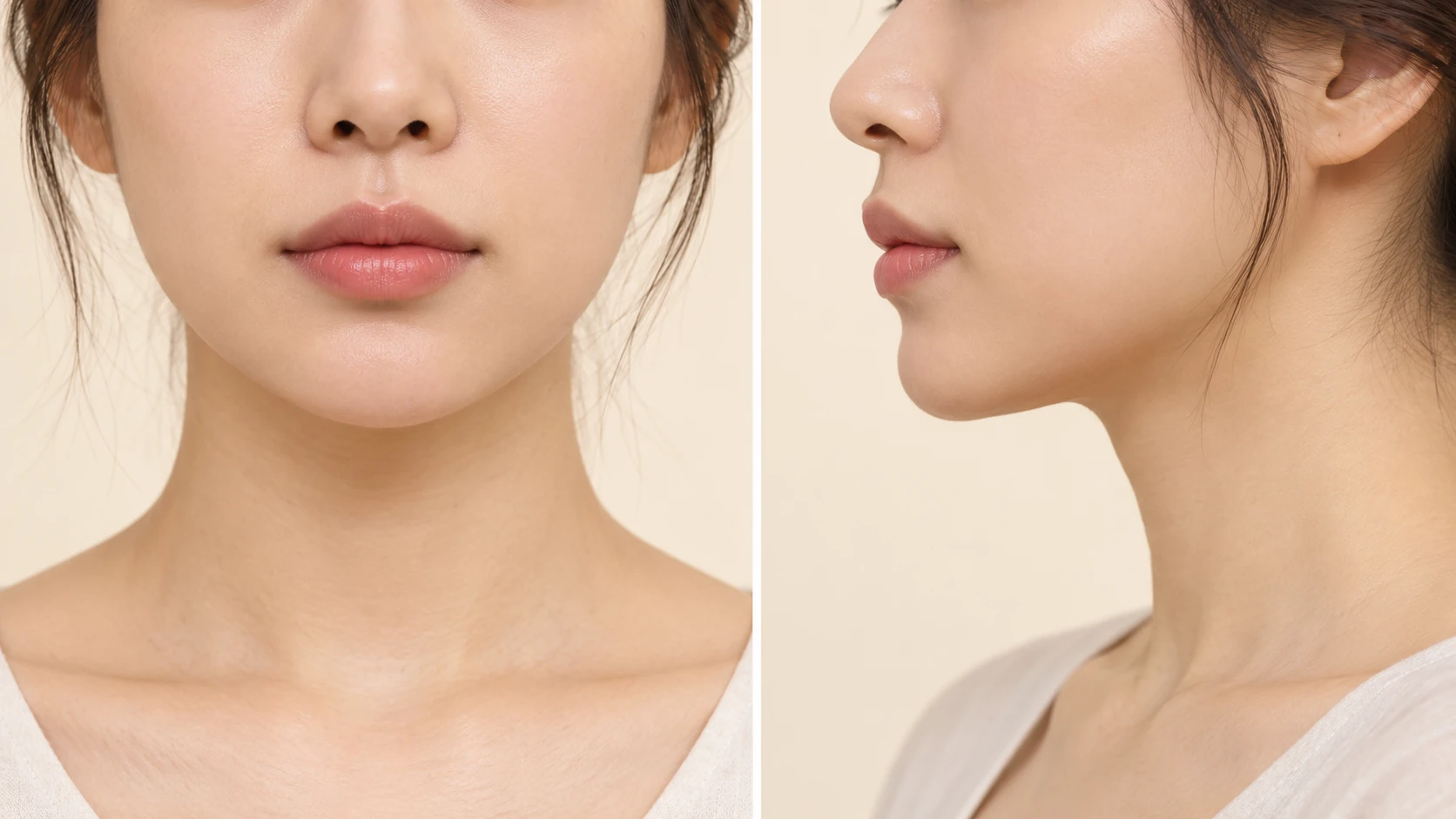
Does a chin implant change how the teeth meet?
An implant generally aims to add chin contour, so should not be assumed to correct an upper-to-lower tooth relationship. If chewing or bite problems exist, ask whether dental or oral and maxillofacial assessment is needed first or alongside consultation. Orthodontic treatment does not automatically make every implant operation impossible either.
| Information to separate | Consultation question |
|---|---|
| Recessed-looking chin | Is the chin itself or the jaw relationship involved? |
| Chewing, bite or lip-closure difficulty | Is functional assessment or another specialty needed? |
| Orthodontic or jaw-surgery history | Does it affect current anatomy or this plan? |
What should you ask about tests or another consultation?
Ask which question a test is intended to answer: bone relationships, teeth or previous surgery, for example. Ask how results could change the plan. Neither assume everyone needs the same tests or operation nor decide from photographs that assessment is unnecessary.

- Which parts would an implant change, and which would remain?
- If function is affected, what should be assessed first?
- How do no surgery and other approaches differ?
What matters beyond implant size?
The ASPS facial implant guide describes selecting shape and size according to goals, facial features and clinical judgment. Discuss material, position, incision, existing asymmetry, sensory changes and risks such as infection, displacement and further surgery. Do not conceal bite difficulties to match a contour photograph.
Frequently asked questions
Does every small chin mean a bite problem?
No. Appearance alone cannot diagnose the bite. Explain symptoms and treatment history and obtain the assessment needed.
Should consultation wait until orthodontics ends?
Share the orthodontic plan and progress and ask whether the treating teams need to coordinate. Timing and surgery are individual decisions.
Does a larger implant solve protrusion around the mouth?
Increasing size does not change every relationship among the mouth, teeth and jaws. Examination is needed to explain achievable changes and limitations.
Separate chin contour from teeth and jaw relationships
Different issues can sit behind “a small chin.” Share appearance goals, functional difficulties and treatment history, then understand the implant's scope and whether other assessment is needed before deciding.
This is general chin implant consultation information, not a dental diagnosis or personal surgical recommendation. Tests, referrals, materials, size and extent depend on assessment. Risks include bleeding, infection, scarring, sensory changes, asymmetry, implant displacement or exposure and further surgery. Bite correction or a particular contour is not guaranteed.