



Rhinoplasty without synthetic implants: natural-looking changes tailored to the nose’s structure
Date posted
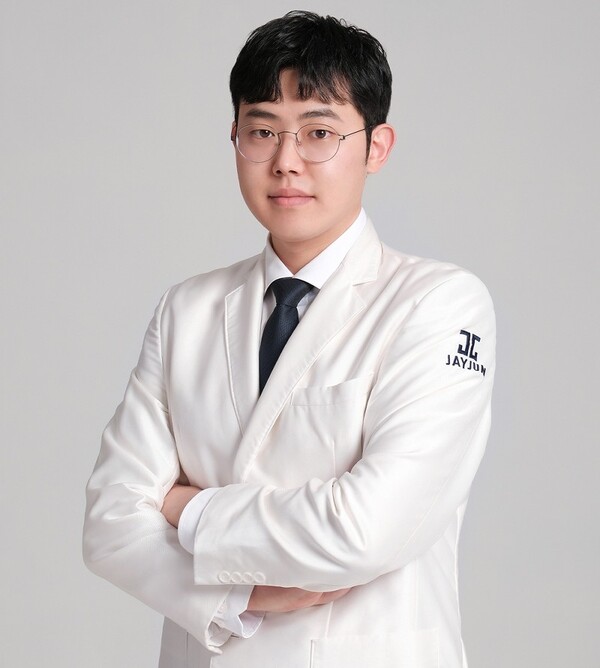
Plastic surgery specialist at JAYJUN Plastic Surgery & Dermatology Clinic Dr. Park Cheolheum, Director
Interest in rhinoplasty without synthetic implants has recently been growing among people considering nose surgery who want to ease their concerns about artificial implants and achieve natural-looking changes using their own tissue.“Without implants” does not mean that no material is used during surgery. Rhinoplasty without synthetic implants improves the height and shape of the nose using the patient’s own tissue, such as cartilage or dermis, instead of artificial implants such as silicone or Gore-Tex. When needed, this tissue can support the nasal tip or correct the nose’s shape.
Septal cartilage, for example, can be taken from inside the nose to support the tip or adjust the nose’s length and height. Ear cartilage is relatively soft and curved, so it is often used to refine the tip. Rib cartilage may also be used when stronger structural support is needed. The tissue selected can vary according to the patient’s nasal structure and the extent of correction required.
This approach may be considered particularly when the bridge already has some height but the tip is low or drooping and the desired improvement is mainly at the tip. It may also be an option for people concerned about artificial implants or seeking a natural change that harmonizes with the face rather than a very high bridge. Depending on the condition of the nose, it can also be performed when correcting the nasal framework, such as a dorsal hump, to create a natural line without implants.
However, when the bridge is very low and a substantial increase in height is desired, the patient’s own tissue alone may have limitations in achieving the intended shape. Other surgical options then need to be considered alongside this approach, taking the nasal structure and the degree of change sought into account.
Avoiding implants does not eliminate surgical risks. Even the patient’s own cartilage can undergo resorption or deformation, and asymmetry can occur. Bleeding and infection are also possible during surgery. The procedure should therefore not be judged solely on the fact that it uses no implants.
Rhinoplasty without synthetic implants is best understood as surgery that uses the patient’s own tissue and nasal structure to correct the areas that need it, rather than simply surgery without implants. It is not suitable for everyone. The technique should be chosen after assessing not only the desired height and shape but also the amount of septal cartilage, skin thickness, nasal framework and function.
Before surgery, it is important to discuss thoroughly with a specialist which approach suits your nasal structure, rather than focusing only on whether implants will be used. Planning surgery after accurately assessing individual anatomy and the extent of correction offers the prospect of a safer, more harmonious result.
Dr. Park Cheolheum, plastic surgery specialist and director at JAYJUN Plastic Surgery, advised: “It is important to understand rhinoplasty without synthetic implants not simply as avoiding artificial implants, but as precisely correcting the necessary areas while considering each patient’s nasal structure and the characteristics of their own tissue. Natural-looking results and stability can be expected together when the most suitable method is chosen after a comprehensive assessment of septal cartilage quantity, skin thickness, nasal function and the extent of the desired change.”