



Lower eyelid surgery, expected to create a youthful look for aging middle-aged faces... Must check ‘this’
Date posted
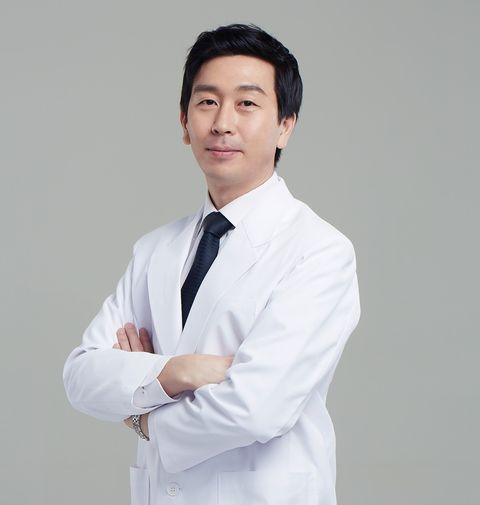
<JAYJUN Plastic Surgery & Dermatology Clinic> Plastic surgery specialist Park Hyungjoon, Chief Medical Director
Aging appears most quickly around the eyes. This is because the skin around the eyes is thinner and more sensitive than other areas, so it is affected by aging more quickly. Because everyone wants to maintain a youthful appearance for a long time, middle-aged and older people often consider lower eyelid surgery, also called facial rejuvenation surgery or cosmetic surgery for parents.Lower eyelid surgery improves sagging and bulging orbital fat under the eyes and tear troughs, and corrects the sagging skin and muscles under the eyes, helping to restore elasticity and smoothness to aged lower eyelids.
The surgical process involves making an incision in the lower eyelash area, dissecting the tear trough ligament and adhesions, relocating or removing the sagging orbital fat underneath, and then reinforcing the septum to improve the protruding orbital fat and tear trough. The sagging orbicularis oculi muscle is fixed to the periosteum, and at the same time, part of the sagging skin is removed when necessary and the skin is sutured. Through this process, the area under the eyes can become more youthful and elastic.
A surgical method frequently mentioned along with lower eyelid surgery is the under-eye fat repositioning surgery. Under-eye fat repositioning involves making an incision inside the conjunctiva without cutting the skin, dissecting the ligament of the under-eye groove, and simultaneously repositioning or removing fat and reinforcing the septum to improve orbital fat and the tear trough. Because it does not involve removing skin or fixing the orbicularis muscle, this method is suitable for people in their 20s to 40s whose skin has not yet sagged.
Although under-eye fat repositioning is known to be a plastic surgery suitable for relatively young people, the number of cases of under-eye fat repositioning instead of lower eyelid surgery has recently been increasing among middle-aged people. This is because the accessibility of cosmetic procedures is increasing, and the number of middle-aged people consistently receiving skin care such as lifting lasers or injections is increasing.
Although these people are middle-aged and in their 50s and 60s, the sagging skin under the eyes is slight, so they may not undergo lower eyelid surgery to improve the sagging skin, but can bring about a clear improvement in the fat under the eyes and the sulcus just by relocating the fat under the eyes. In addition, even if there is sagging of the skin and muscles under the eyes, the number of cases where only the under-eye fat repositioning is performed for quick recovery is increasing, and this can be said to be an area that the patient can choose depending on the degree of improvement desired.
However, it should be noted that under-eye fat repositioning and lower eyelid surgery are highly difficult surgeries that require delicate techniques to manipulate the fat, ligaments, muscles, and skin under the eyes, and require a thorough diagnosis of each individual's eye structure and orbital bone condition and a careful approach. Since the appropriate surgical method and scope of surgery may vary depending on the individual's condition, it is essential to have sufficient consultation with an experienced medical staff before surgery regarding the type of surgery to undergo and the degree of improvement that can be achieved.
Park Hyungjoon, director of JAYJUN Plastic Surgery, advised, "Lower eyelid surgery is one of the most common eye surgeries performed in the middle-aged and older people. It can improve aging around the eyes and create a younger, more vibrant impression, but it is a surgery that is significantly more difficult than widely known. Therefore, it is most important to find the most suitable method for you through sufficient consultation with the medical staff before surgery, and it is advisable to choose a medical staff and hospital with extensive clinical experience."